The idea of leaving a stable corporate career to start a new business might feel overwhelming. The risks, startup costs, and uncertainty often keep people tied to roles that no longer fulfill them.
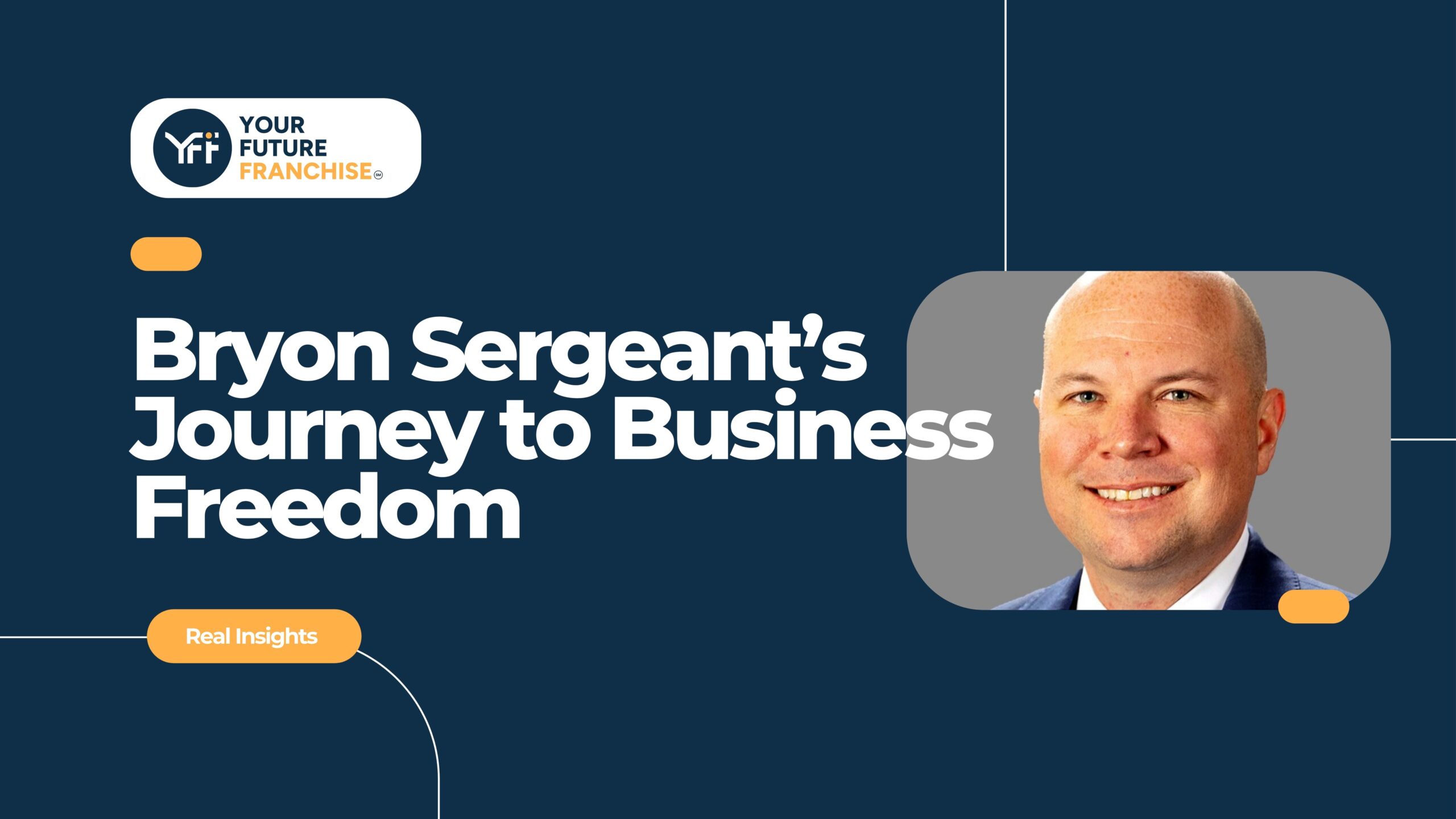
But the truth is, franchising might actually be more accessible than it seems. If you want to quit your corporate job and put on your entrepreneur hat, take some lessons from the recent Your Future Franchise placement, Bryon Sergeant.
For Bryon, a seasoned consultant with over 15 years of corporate experience, franchising presented a clear and compelling path to business ownership- combining independence with the security of a proven business.
His choice was a deliberate one; a path toward personal freedom and building a legacy for his family.
Bryon shares how he transitioned from corporate consulting to becoming a franchise owner with leadership and guidance from Scott Thompson at Your Future Franchise. To learn which franchise is right for you, book a free consultation with Scott.
Bryon’s Experience Summarized
- Goal: Shift from a 15+ year corporate consulting career to owning his time and building a generational asset, driven by a desire for direct impact and autonomy.
- Catalyst: A conversation with Scott Thompson opened his eyes to franchising as a viable alternative to buying an existing small business, which he found challenging to vet.
- Process: Scott Thompson’s structured 7-step process was critical, expanding Bryon’s view beyond food franchises and guiding him to a niche, scalable business.
- Decision: Bryon chose Surface Experts for its “recession-proof, AI-resistant” model, which met his criteria for scalability and recurring revenue.
- Key Insight: The franchise agreement is a valuable, appreciating asset that can be sold, reframing the investment as an asset acquisition rather than a pure risk.
The Turning Point From Corporate America to Business Ownership in Franchising
Bryon’s career spanned mergers, acquisitions, bankruptcies, and large-scale financial restructuring. He understood business deeply, yet despite his experience and acumen, something was missing.
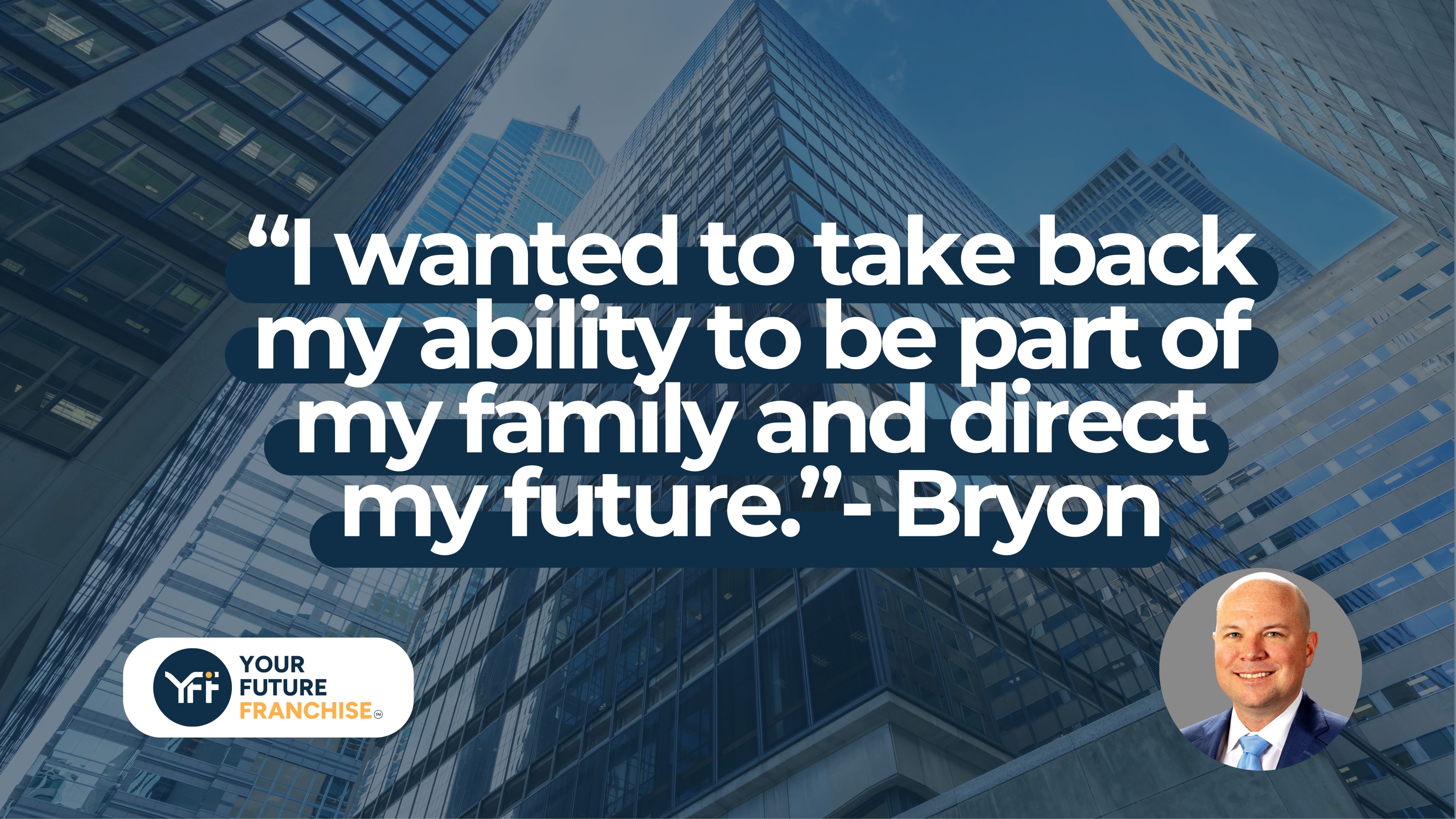
“I’d seen the ebbs and flows of markets, the successes and failures of corporations, and I got to a point where I wanted to own my time,” Bryon explained.
Corporate life offered security, but not freedom.
The long hours and constant demands left little room for family or fulfilment. Bryon wanted to own a business, not just work inside one.
He wanted a path to business ownership that aligned with his values and gave him the opportunity to build an appreciating asset.
That desire ultimately led him to franchising.
Discovering What Franchising in Business Entails And Why Bryon Saw an Opportunity to Invest
At first, Bryon didn’t fully understand what franchising in business fully entailed.
Like many potential franchisees, he assumed franchises were limited to recognizable fast-food brands or rigid corporate-style operations.
The appeal in that perspective was limited.
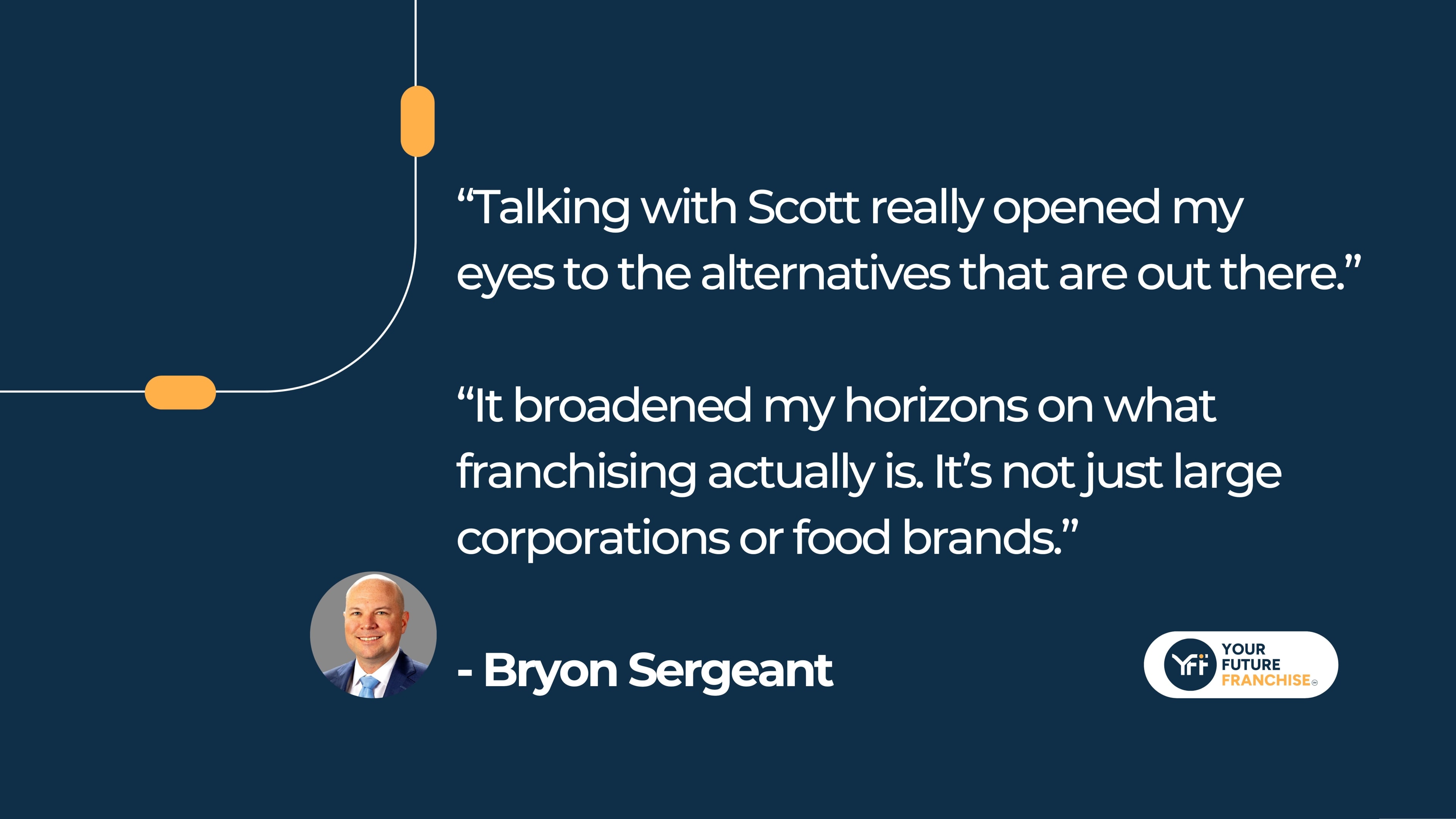
“I thought franchises were just large corporations selling locations,” he revealed.
Through his conversations with Scott at Your Future Franchise, Bryon realized that franchising is far broader than he had imagined.
The ‘Ah-Ha’ Moment for Bryon
The ‘ah-ha’ moment for Bryon was understanding that franchise opportunities exist across virtually every industry, encompassing a wide range of niches, services, and business models- providing a path to business ownership in virtually any sector.
For Bryon the picture that began to emerge felt realistic, desirable, and attainable.
This understanding marked a pivotal shift in Bryon’s journey toward franchising.
Understanding the Franchise Model, Franchise Agreement and Contractual Obligations
Through working with franchise consultant Scott Thompson, Bryon discovered how the franchise model turns business ownership into a structured, supported opportunity.
Rather than starting from scratch, he could invest with confidence, leveraging a proven system that included marketing, operations, training, and ongoing support.
The franchise agreement outlined the relationship between him and the franchisor, covering everything from initial investment and ongoing fees to brand standards that ensure consistency and customer trust.
These rules weren’t restrictions- they were the blueprint for success.
For Bryon, franchising meant more than a business- it offered a ready-made framework, a built-in customer base, and the reassurance of transparency through the Franchise Disclosure Document (FDD).
It was a clear, low-risk path to ownership, with guidance at every step.

Due Diligence, Franchise Opportunities, and Reduced Risk
With a background in finance, Bryon approached his franchise investment methodically.
He reviewed franchise disclosure documents, studied litigation history, analyzed startup costs that ranged from several thousand dollars upward, while comparing ongoing costs across multiple franchise options.
It was a rigorous process, which Scott helped guide each step of the way.
“I wanted to see whether the numbers justified the opportunity,” he told us.
The franchise rule, enforced by the Federal Trade Commission, requires franchisors to provide transparent information to protect franchisees, including financial performance representations, fees, and historical performance.
Evaluation Process:
- Numbers First: Analyzed Franchise Disclosure Documents (FDDs) for financial health (margins, revenue growth).
- Operational Validation: Used validation calls with existing owners to confirm the FDD numbers and understand day-to-day operations.
Key Criteria for Selection:
- Recession-proof
- AI-resistant
- Scalable
- Recurring revenue
Advice for Prospective Franchisees
- Consultant Value: A consultant like Scott is essential for navigating the market and identifying opportunities you wouldn’t find alone.
- Asset, Not Risk: The franchise agreement itself is a valuable, appreciating asset that can be sold, making it an investment in an asset rather than a pure risk.
- Thorough Due Diligence: Scott’s process is designed for deep investigation. Use validation calls to ask challenging questions of existing owners to uncover potential pitfalls and ensure a good fit.
This level of disclosure significantly lowers risk compared to starting an independent small business with no benchmark for success. To learn more about the franchise evaluation process, book a free consultation with Scott.
Validation Calls and Learning from Other Franchisees
Bryon participated in validation calls with other franchisees, listening carefully to real franchise owners discuss operations, marketing, customer acquisition, site selection, training, and finance.
“The validation calls gave me a real understanding of what day-to-day operations actually look like”, Bryon noted.
These conversations helped him understand:
- The real-world franchisee benefits
- How ongoing training and support work
- What daily operations look like
- How franchises build customers through marketing and services
This peer insight helped confirm that franchising offers many advantages, especially for a first-time business owner.
The Moment of Clarity: Choosing a Successful Franchise
After reviewing multiple franchise opportunities, Bryon chose Surface Experts, a service-based franchise specializing in surface repairs for multifamily housing and hotels.
One of Bryon’s non-negotiable requirements was that the business be AI-proof- and this opportunity delivered.
With Scott’s continued guidance, Bryon was able to identify a business built to withstand technological disruption.
Surface Experts stood out because it offered:
- A successful brand with established brand recognition
- A proven business model
- Strong support systems
- Recurring services and customers
- Lower risk compared to trend-based industries
“It checked every box,” Bryon said. “It’s scalable, AI-resistant, and built for long-term success.”
With full transparency and all financial details clearly presented throughout the discovery process, Bryon was able to refine and define the requirements that needed to be met before entering into a franchise agreement.
How Bryon Found Mentorship, Support, and the Journey to Becoming His Own Boss
One of the most valuable aspects of Bryon’s experience was mentorship.
Through the franchisor and consultant network Scott provided, Bryon gained access to experienced owners, training programs, and industry knowledge.
This support allowed him to operate confidently, even without prior experience in the industry.
“You’re never alone,” he said. “The support is real, and it makes all the difference.”
Why Franchising Offers Lower Risk for Business Owners
Bryon’s journey highlights why franchising is often considered a lower-risk way to own a business.
Compared to starting a new business independently, franchise businesses offer:
- A built-in customer base
- Established brands with recognizable branding
- Ongoing training and support
- Centralized marketing and services
- A tested, proven, and replicable franchise system
These factors significantly reduce the uncertainty many business owners face when launching a small business from scratch.
So, How Do You Know if Franchising is the Right Route for You?
Bryon Sergeant’s story illustrates how franchising can serve as a powerful bridge between dreams and reality.
With Scott’s guidance at Your Future Franchise and the support of a proven franchise system, Bryon invested in a business model that aligned with his goals and ultimately led him towards greater freedom and flexibility.
Every business path has its challenges, and franchising is no exception. But having the right guidance, transparency throughout the process, and insight from seasoned experts can make all the difference when it comes to making a confident, informed decision.
If you feel ready to explore franchising and you’re seeking business ownership with a more structured foundation and a higher degree of support, this model continues to stand out as one of the most compelling routes available.
Get an objective assessment of whether ownership fits your goals, a guided evaluation can provide clarity without pressure. Book a free consultation with Scott
FAQs About Franchising
What is a franchise system?
A franchise system includes training, marketing, operations, support, and standards provided by the franchisor to ensure consistency and success.
What is the franchise business model?
The franchise business model allows individuals to operate a business using a proven structure, reducing risk while offering ownership and independence.
Are franchises good for first-time business owners?
Yes. Franchises provide training, support systems, and lower risk, making them ideal for first-time business owners.
What types of franchises are there?
Users may want to explore different types of franchises available in the market, including examples of successful franchise businesses and the various business models they operate under. Successful franchise businesses in the United States include fast food franchises like McDonald’s and Taco Bell.
Why is brand recognition important in franchising?
Established brand recognition creates trust with customers and provides a built-in customer base, helping franchisees generate revenue faster than a new business.
What should I assess before choosing a specific franchise?
Franchisees should investigate the franchisor’s background, including their experience and any legal issues, before making an investment. Another important consideration is considering the total costs involved in starting a franchise, including initial fees, ongoing royalties, and other operational expenses.
How long do franchise agreements last?
Franchise agreements typically last between five and 30 years, with penalties for violations or early termination.