

It’s a big decision to start a franchise and it’s natural to have mixed feelings. You’ll feel excitement about the future, along with uncertainty and anxiety around franchise development and whether you’ll succeed at it. After all, you’re staking your future financial security on this new venture.
You might gain a surge of confidence when you’re exploring franchise opportunities and seeing their potential, but what do you actually do to help ensure success once you open your doors to the public?
Luckily, you have an experienced and empathetic franchise consultant in Scott at Your Future Franchise. His role is to gently and transparently guide you through an assessment of whether franchising is the right choice for you and help you with all manner of franchise development services.
He isn’t there to merely sell you a business. He will walk you through the process of planning and setting up your franchise and continue supporting you at each stage of your franchise business development, including franchise agreements, legal compliance and franchise fees.
Scott will help you to shift from merely running your business to following a franchise growth strategy, increasing your customers and creating a stable, steadily improving revenue stream. Here’s how our path to franchise ownership works.
Key Takeaways
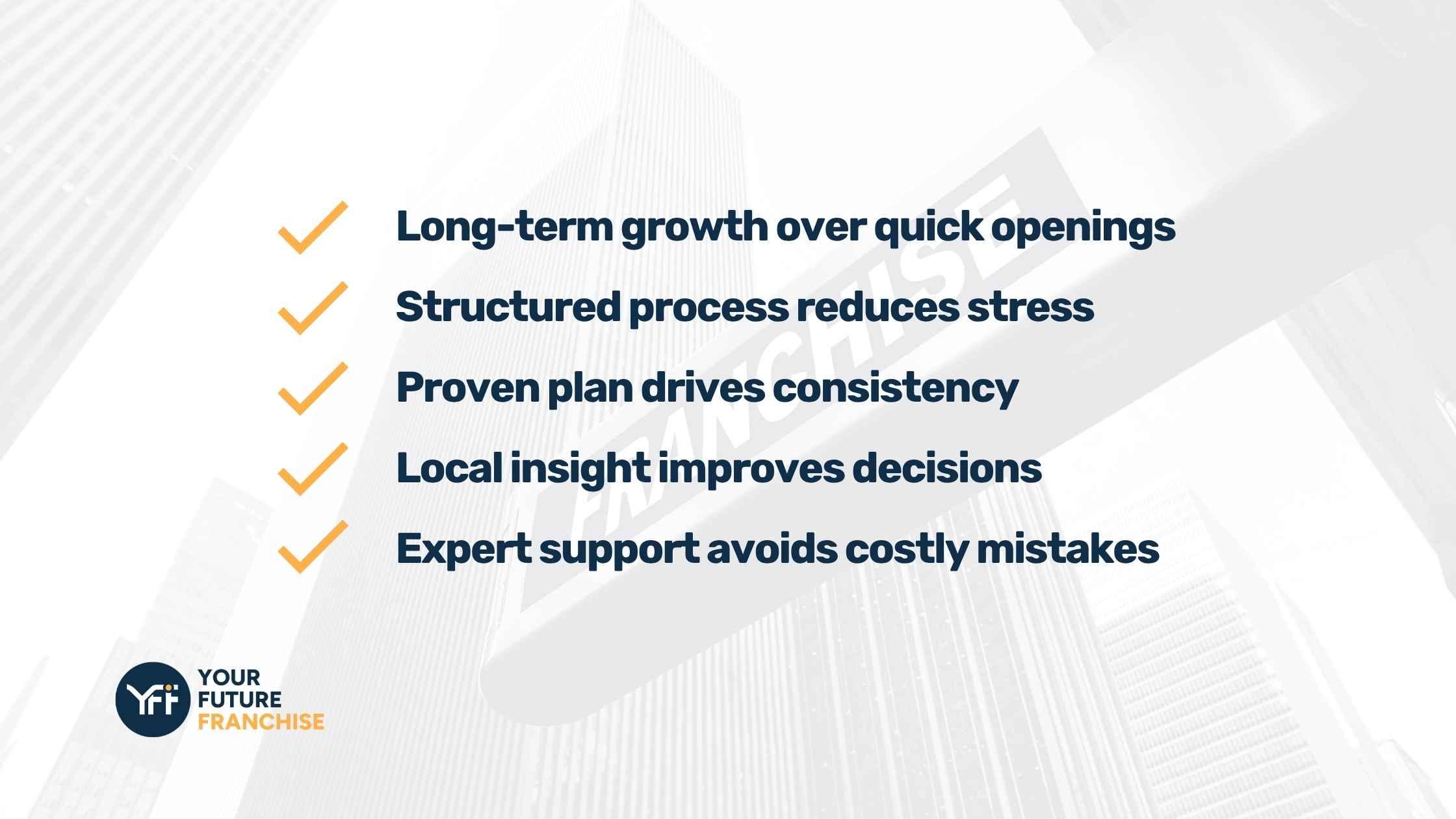
- Franchise development focuses on long-term growth, not just opening your business.
- A clear franchise development process provides structure and reduces stress.
- A proven business development plan helps you stay focused and consistent.
- Understanding your local market improves decision-making and results.
- Ongoing support from experts like Scott can help you avoid costly mistakes during brand development.
How To Master Franchise Development for Your Franchise
The first step to mastering franchise development is to understand that your role reaches far further than following the franchisor rules, conventions and instructions. The franchise agreements merely provide a framework. Whether you succeed or not depends on how you implement your operation and the value you add over and above the standard expectations.
Don’t rely on the franchise brand to do all the heavy lifting. Brand recognition certainly goes a long way towards attracting customers, but it’s simply not enough by itself. The success of your individual franchise offering depends on many other aspects, such as how you manage the operations, the daily decisions you make and, crucially, the relationships you build with your customers. Satisfied customers are very often return customers and also enhance your reputation through word of mouth.
Key steps in franchise development include assessing franchise suitability, legal compliance through a Franchise Disclosure Document (FDD), developing operating systems, trademarking, and initiating marketing to secure franchisees.
If you’re only beginning your journey and opening your first franchise, here’s a detailed guide to help you understand the path to franchise ownership.
It’s your business so take full ownership
Franchise business development is about taking practical, hands-on ownership of all aspects of your business so that you can identify opportunities for operational improvement and better customer experiences. For instance, if some days are quieter, you can create targeted promotions such as discounts on selected items, or adjust your staffing levels on those days.
The more insights you gain into the operational side of your franchise, the more confidence you’ll have. You’ll feel more in control of what drives your success, where your weak points are and how customers interact with your business.

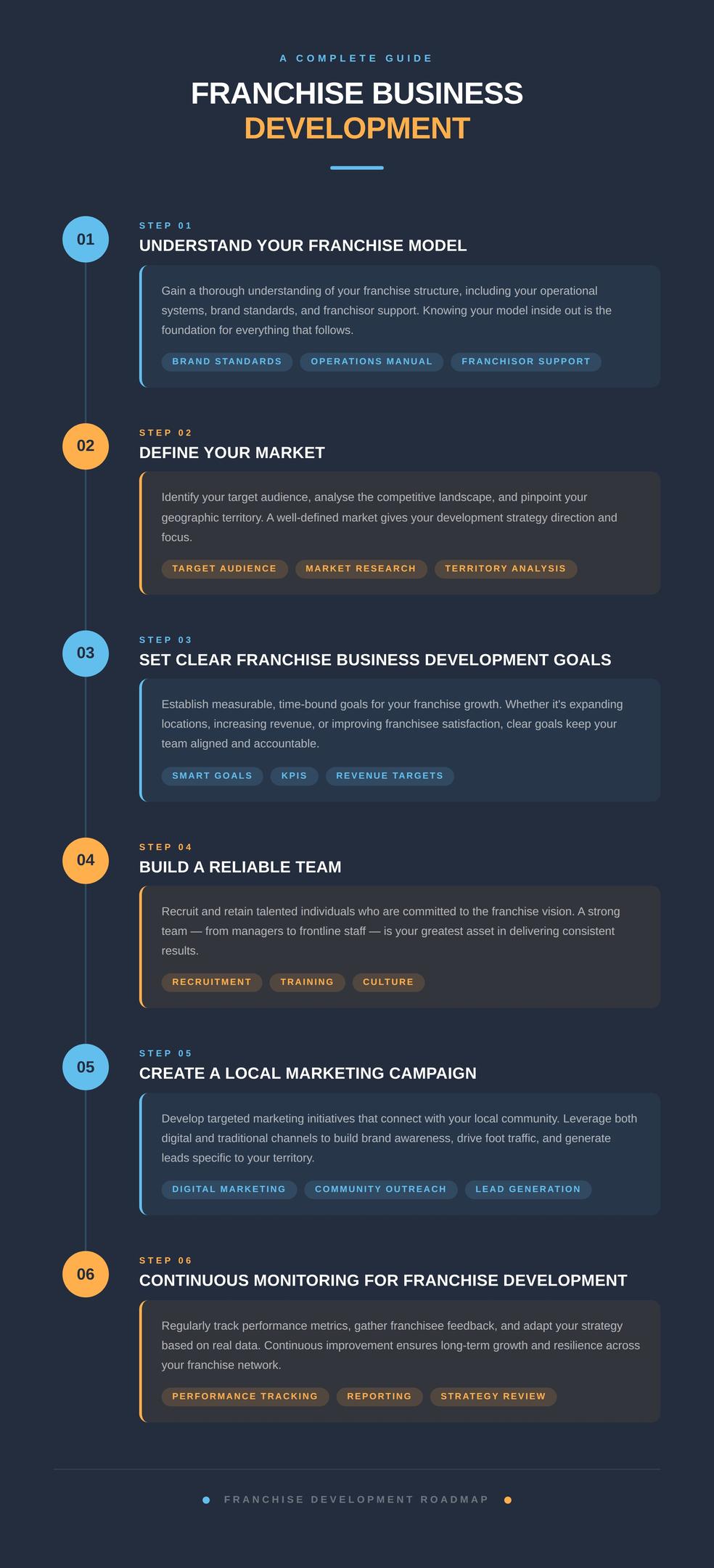
The 6-Step Franchise Development Process
A structured franchise development process gives you clarity. It breaks down what can feel overwhelming into manageable steps. Here’s a helpful six-step framework to give you a deeper understanding.
Step 1: Understand Your Franchise Model
Once you’ve chosen the type of franchise you’d like to own, it will pay off handsomely if you learn every aspect of the franchise system. Make sure you understand brand standards, daily operations and customer expectations.
It’s important to take your time at this stage. The decisions you make can have a long-lasting impact on your franchise development, so don’t rush things here. Read the training manuals and other materials. Don’t be afraid to ask as many questions as you want if things aren’t clear. This is where you’re building your foundation, and a strong understanding reduces the possibility of early mistakes.
Step 2: Define Your Market
Take some more time to learn about your community’s specific needs, habits and expectations as it applies to your chosen franchise area. Observe who makes up your core customer base, discover their preferences and know when they’re most active. Then tailor your approach accordingly. You may need to adjust your brand messaging or introduce special promotions to match the character and desires of your audience.
These factors can also affect where you open your franchise. Effective site selection for new franchise locations involves analyzing target demographics, competition and demand.
Step 3: Set Clear Franchise Business Development Goals
You need clear goals to drive your franchise in the right direction. A well-defined franchise development plan will help tremendously in setting realistically attainable goals.
The franchise growth strategy goals must be specific and measurable. There’s no use in setting goals if you can’t measure your progress towards your franchise development aims.
Goal examples can include:
- Monthly revenue targets
- Customer growth
- Cost management aims
- Optimizing operational efficiency
Defining such goals helps your franchise to stay focused on what’s most important, and measuring them gives you insights into your progress.
Step 4: Build a Reliable Team
Your team is central to the success of your franchise, whether it’s people working behind the scenes or customer-facing staff. They’re the ones who directly represent your brand when interacting with customers.
It’s essential to take your time finding the right people to hire. Look for those with a positive attitude and, ideally, an interest in your franchise area. Reliability and willingness to learn are other important character traits to fit in with brand standards.
Once you’ve selected your team, the right training programs are critical. They must be able to build customers’ trust when they interact with them and deliver consistent levels of service. Clear communication is vital to this. Encourage feedback and questions.
Let your team feel that their contributions and experiences are valued. This makes them feel more engaged with the business and promotes pride in their personal performance.
Step 5: Create a Local Marketing Campaign
Your franchisor typically rolls out national marketing campaigns for the franchise as a whole. It’s up to you to market your own branch. Don’t over-complicate things. Focus on simple strategies and maintain consistency. The aim is to be visible and relevant.
Some ideas:
- Engage with your local community to create awareness
- Run promotions for local customers
- Use social media to attract interest
Step 6: Continuous Monitoring for Franchise Development
Tracking progress towards your goals is non-negotiable. It helps you to see what is working and what needs to improve. Some of the main numbers you can monitor are sales trends, customer feedback, changes in overheads and revenue. Look for patterns that indicate areas where you can make adjustments to improve these metrics.
How to Implement Your Franchise Development Plan
Understanding is one thing; application is another. Our guidance focuses on experience, integrity and results. Here’s a practical approach to help you implement what you learn and create a workable business model.
Prioritize Tasks and Actions for Franchise Growth
It’s understandable if you feel a bit overwhelmed when launching a franchise. Don’t try to solve all the issues at once. Start by focusing on the areas that will have the most impact on your business. Excellent customer service is a good starting point. By prioritizing your efforts you can avoid time wastage and apply your energy and resources most effectively.
Create Simple Standardized Systems
The best way to promote operational consistency is to break down your franchise development plan into simply daily processes and create an operations manual. This removes ambiguity when your team has to make decisions. As examples, you can create processes for dealing with customer feedback, performance review schedules and staff training routines.
Review and Respond
No plan works perfectly from the off. Conduct regular reviews to identify well-performing areas and ones that aren’t yet up to scratch. Ask yourself what is working well, what needs improvement and what changes you can make to respond effectively. By doing this consistently you’ll always be able to see how your franchise development is progressing.
Recapping the Fundamentals of Franchise Business Development
The franchise development process isn’t about gaining quick success or taking shortcuts to heighten your brand profile. It requires a combination of:
- A keen understanding of your business
- A well-structured franchise business development plan
- Building a reliable team
- Clear communication at all levels
- Consistent measurement and improvement
Each element must support the other to create a cohesive growth framework. Be patient. It takes time to grow a franchise from scratch. You might feel that progress is a bit slower than you’d like, but the key to stable long-term results is consistency.
Final Takeaways on Franchise Development
Approach franchise ownership as a journey. The fact that you’re linking up with an established brand does provide brand recognition, but franchise business development isn’t much different to building your own business by yourself. Yes, you’ll get franchisor support, but the success of your day-to-day operations is your own responsibility. It takes learning, dedication and persistence.
That’s why working with an experienced, understanding franchise consultant like Scott at Your Future Franchise will make the process clearer, easier to implement and less stressful. He’ll help you assess whether franchise ownership truly is for you and guide you towards informed decisions in your best interests.
If you need reassurance, here are some success stories and client reviews.
Book a free Consultation with Scott
FAQs on Franchise Development
How long does franchise development usually take from idea to first franchise sale?
For a business with at least one successful company-owned location, the full development process typically takes 6-12 months before awarding the first franchise. Realistic timelines see brands moving from initial planning to 5-10 units within 24-36 months. Rushing below this timeline often leads to weak documentation and stalled franchise growth.
What are the most common mistakes new franchisees make?
Common mistakes include relying too heavily on the brand name, neglecting local marketing, and not tracking performance regularly. Another issue is trying to do everything at once instead of focusing on the most important areas first.
Can I adapt the franchise model to suit my preferences?
Franchise systems are designed to maintain consistency, so changes must stay within brand positioning guidelines. However, you can make adjustments in areas like customer engagement and local marketing to better suit your audience.
What skills are most important for successful franchise development?
Key skills include communication, time management, problem-solving, and the ability to follow systems while thinking strategically. Being open to learning and adapting is also important.
How do I know if my franchise is on the right track?
Regularly reviewing your goals and performance metrics will help you assess progress. Consistent improvements in customer satisfaction, operations, and financial performance are good indicators that your franchise growth strategy is working.