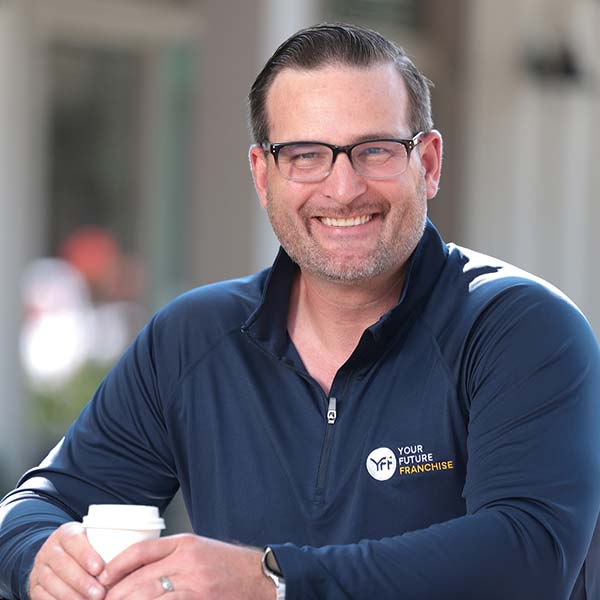

For years, Frank Markesi built a successful corporate career in IT security and compliance, but behind the stability, he could see the warning signs of change.
Instead of waiting for layoffs or restructuring to decide his future, he and his wife Carrie chose to explore franchising as a path to becoming a business owner and regaining control over their income, lifestyle, and long-term security.
This blog follows how they navigated the process with guidance from Your Future Franchise founder Scott Thompson and why owning a franchise ultimately felt like the right next step.
Key Takeaways
- Corporate job security is no longer what it once was. For many professionals, the franchise system offers a more controllable form of risk, thanks to a proven business model.
- Frank and Carrie had previously owned a franchise, returned to corporate life, and eventually decided they were ready for another franchise opportunity.
- Working with a franchise consultant removed the guesswork. Scott helped Frank build a profile, narrow down franchise opportunities, explain the franchise fees and ongoing costs, and make a confident decision.
- Surface Experts was not Frank’s first choice as a business owner. It became the right choice through a structured process of research, validation, and honest self-assessment.
- The advantages of franchising go beyond income. For Frank, the biggest gain was control over his time, his risk, and his future.
When Corporate Stability Stops Feeling Stable
Frank had spent years working in information security and compliance for large international companies. He had built a respected career, developed specialist expertise, and done everything people are told will create long-term stability.
But over time, things started changing.
Projects were slowly being moved overseas. Teams became leaner. More pressure was placed on fewer employees, and the sense of security that once came with corporate life no longer felt guaranteed.
“A lot of the work was being allocated overseas over time,” Frank explains. “You start seeing the writing on the wall and asking yourself whether you really want to continue that ride.”
What unsettled him most was how quickly corporations could shift direction when profitability became the priority.
“You work for a corporation, and you’re just a number,” he says. “At the end of the day, it’s about the bottom line. Whose expendable? What can be cut?”
Frank watched experienced employees disappear while expectations remained exactly the same for the people left behind.
“You start cutting into muscle,” he explains. “You lose good people, but the workload doesn’t change.”
For someone who values independence and control, that uncertainty became difficult to ignore.
“I like being in control of my own destiny,” Frank says. “If I’m going to make a change in my life, I want it to happen on my own terms. I don’t want somebody else making that decision for me.”
There was also another reality sitting quietly in the background: age.
Frank knew that the longer he stayed in corporate life, the harder it could eventually become to start over somewhere else.
“I don’t want to be older in life trying to find another job,” he says. “Even though people say age discrimination doesn’t exist, I still think it does.”
Instead of waiting until he had no choice, Frank decided it was time to start exploring another path, one where he could finally run his own business.
Why Franchising Started Making Sense
This was not Frank and Carrie’s first experience with franchising. Years earlier, they had owned a franchise before returning to the corporate world, so the franchise business model was already familiar territory.
Eventually, they found themselves reaching the same conclusion again.
“We decided the corporate world was getting old, and honestly, we were tired of it,” Frank says. “So we thought, let’s try this again.”
For Frank, franchising was never about avoiding risk entirely. He understood that every career path comes with uncertainty. What mattered was having more control over the outcome.
“With a franchise or staying in corporate, both have risk,” he explains. “The question is, which risk are you willing to take? Personally, I’d rather take a risk that I’m responsible for than sit back while somebody else makes those decisions for me.”
That mindset shift became one of the biggest reasons franchising appealed to him.
Rather than continuing to build value inside someone else’s company, Frank wanted the opportunity to build something of his own with Carrie. Something they could grow, shape, and potentially expand over time, ideally inside an established franchise system rather than a risky new business.
The appeal also went beyond income.
Franchising offered:
- Greater flexibility
- More independence and control over day to day management
- A proven business model and established brand recognition
- The chance to build long-term value
- The ability to create a future outside of corporate uncertainty
“Franchises offer a little more freedom than the corporate world,” Frank says. “That was definitely attractive.”
Finding the Right Franchise Business Model Was Overwhelming at First
Once Frank decided he wanted to seriously explore franchising, he quickly realized how difficult it was to know where to begin.
The internet is filled with franchise opportunities, sales pitches, and polished marketing, but Frank understood that choosing the wrong business could become an expensive mistake with his own money on the line.
“You can Google franchises all day long,” he says. “But how do you know what’s legitimate? How do you know what actually makes sense for you?”
That uncertainty led him to Scott Thompson after receiving a recommendation from a friend who had worked with him before.
“Once we spoke to Scott, we knew he was somebody who could help us get to the next level,” Frank says.
Rather than trying to sell Frank a specific business, Scott took Frank and Carrie through a structured discovery process to understand what they actually wanted from franchise ownership.

Together, they looked at:
- Investment comfort level
- Lifestyle goals
- Desired involvement in daily operations
- Long-term scalability
- Personality fit
- Industry interests
- Operational complexity
Scott then narrowed down several franchise opportunities that aligned with their goals and personalities.
One of them was Surface Experts.
Interestingly, it was not Frank’s first choice.
The Franchise Opportunity That Kept Rising to the Top
At first, Frank explored several completely different business concepts.
One involved a larger brick-and-mortar setup with multiple employees and significant operational overhead. Another focused on hydraulic hose services and industrial support. But neither felt quite right.
The more Frank evaluated the options, the more he realized he wanted something scalable without becoming overwhelmingly complex.
That is where Surface Experts started standing out.
The company specializes in surface restoration and repair for apartments, hotels, commercial buildings, and residential properties. The more Frank researched the franchise business model, the more practical and resilient it seemed.
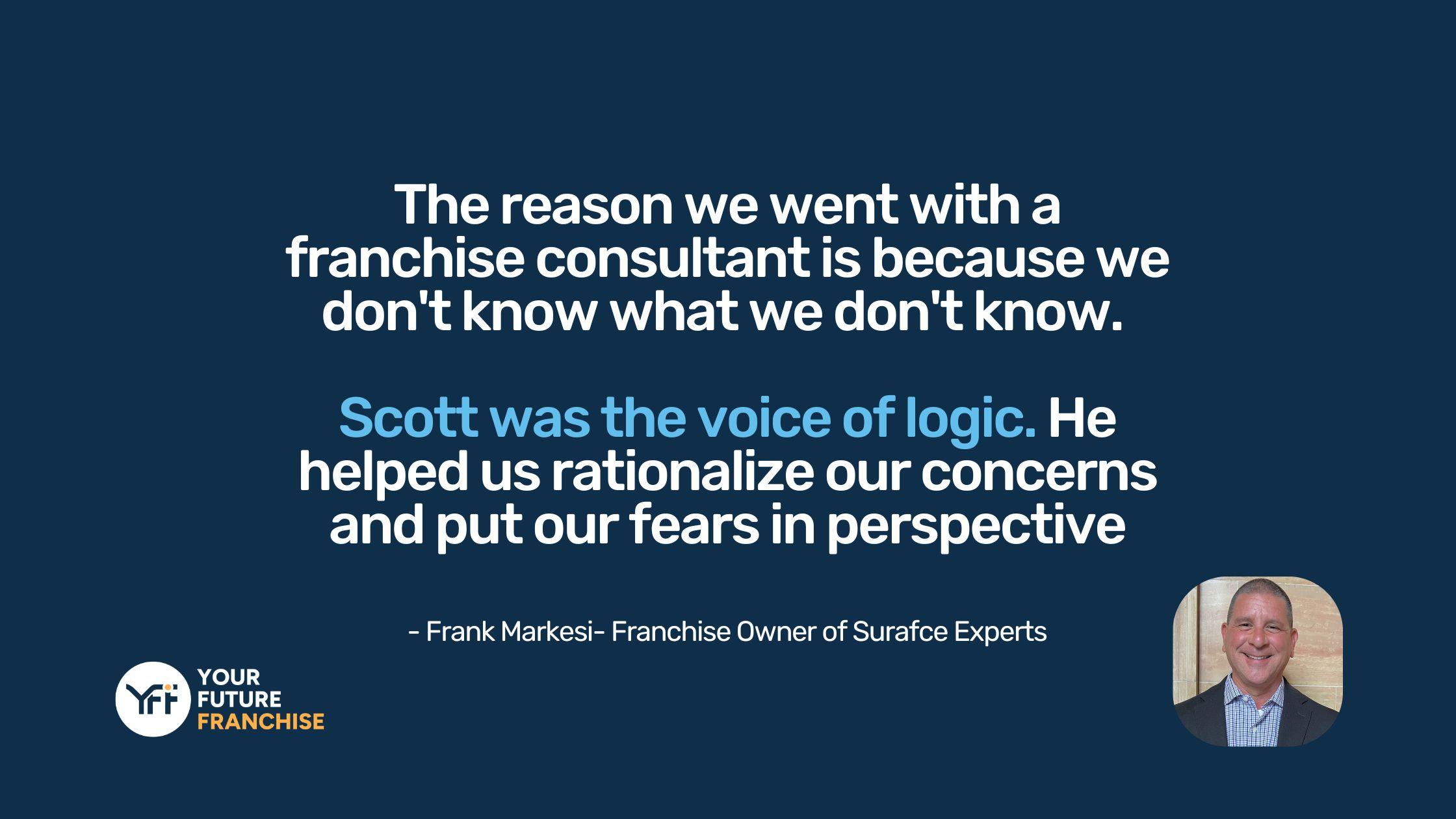
“We felt this business had the ability to be recession-resistant,” Frank explains. “People are always going to live in apartments. Hotels are always going to need maintenance. There’s always going to be a need for these services.”
That long-term stability mattered to both Frank and Carrie.
They were not looking for a trendy business idea. They wanted something sustainable. Something with consistent demand and real staying power.
As they continued working through the process, Surface Experts kept making more sense as a franchise investment.
Why Scott’s Guidance Made Such a Difference
Frank says one of the biggest advantages of the process was having somebody experienced helping them navigate every stage of the decision-making journey.
“Scott was incredibly patient,” Frank says. “He listened to what I wanted in a franchise and really understood the emotions behind the process.”
That emotional side surprised Frank more than he expected.
Buying a franchise is not just a financial decision. It is a life decision. There are moments of excitement, uncertainty, fear, doubt, and constant questions about whether you are making the right move.
Because Scott had owned franchises himself and brought real business experience from different sides of the franchise industry, Frank felt he was speaking to somebody who genuinely understood the process from experience rather than theory.
“Scott wasn’t trying to rush us,” Frank says. “We didn’t make a hasty decision.”
Over several months, Frank and Carrie reviewed opportunities, ruled some out, revisited others, and spent time understanding the realities behind each business model.
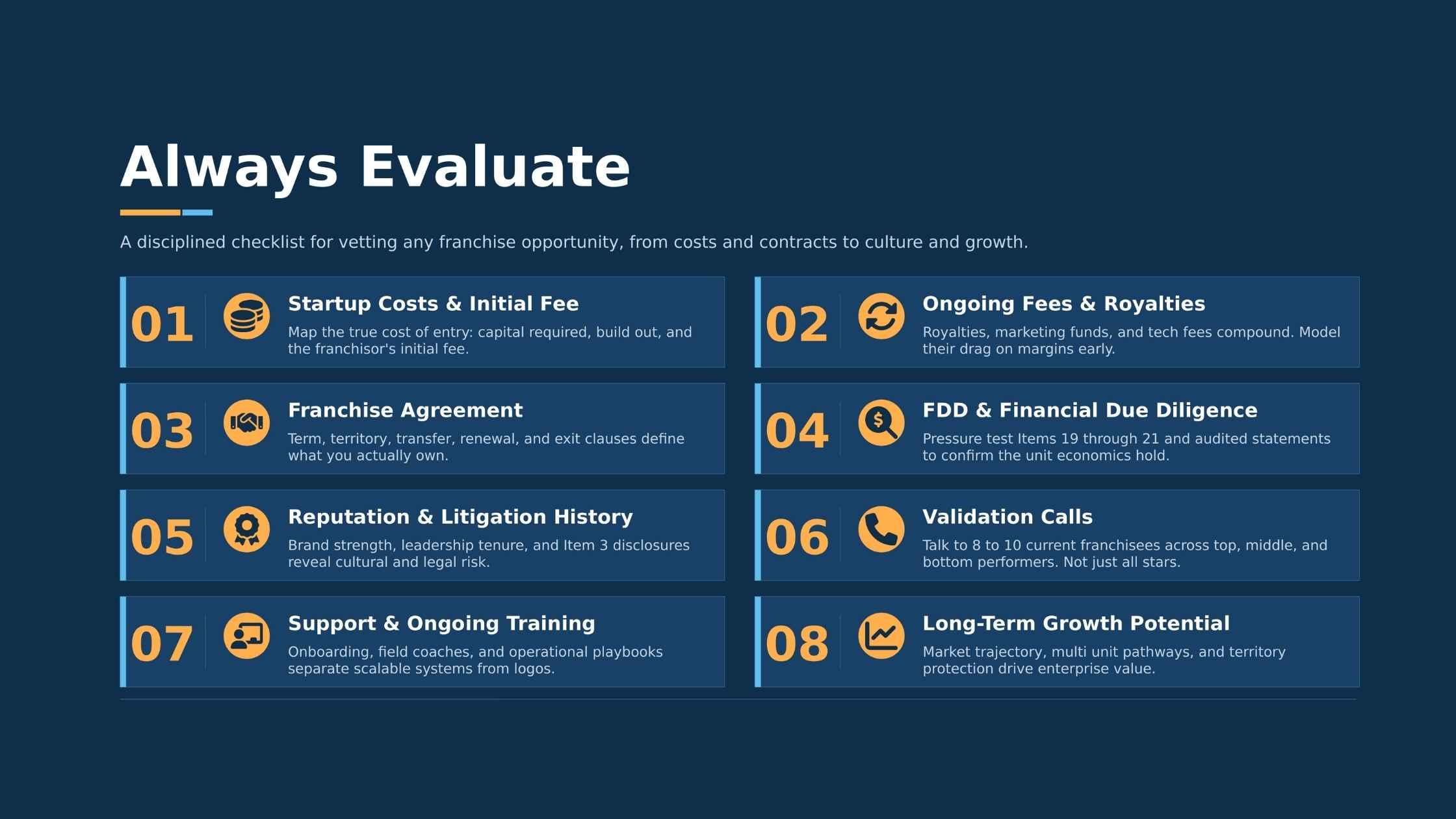
Scott helped them navigate:
- Startup costs, upfront costs, and the initial franchise fee
- Ongoing costs, ongoing fees, and ongoing royalties
- Franchise agreements and the contractual obligations inside them
- Due diligence on the Franchise Disclosure Document and the franchisor’s financial statements
- The franchisor’s reputation, brand recognition, and litigation history
- Validation calls with other franchisees across the franchise network
- Franchisee support structures and ongoing training
- Long-term growth potential
The validation calls with existing franchise owners became one of the most valuable parts of the process.
At first, Frank found them intimidating.
“You’re sitting on calls with people you don’t know, asking questions about their businesses and experiences,” he says.
But what stood out most was the consistency of the feedback.
“If you’re hearing completely different stories from everybody, there’s probably a problem,” Frank explains. “But when everybody is saying similar things, even though they don’t know each other, that tells you something.”
Those conversations gave Frank confidence that the franchise model actually worked in the real world, not just in a sales presentation.
“Scott Became the Voice of Logic” for the Franchise System Frank Was Stepping Into
Even after narrowing down the right opportunity, Frank still had moments where fear and doubt crept in.
That is where Scott’s experience became invaluable.
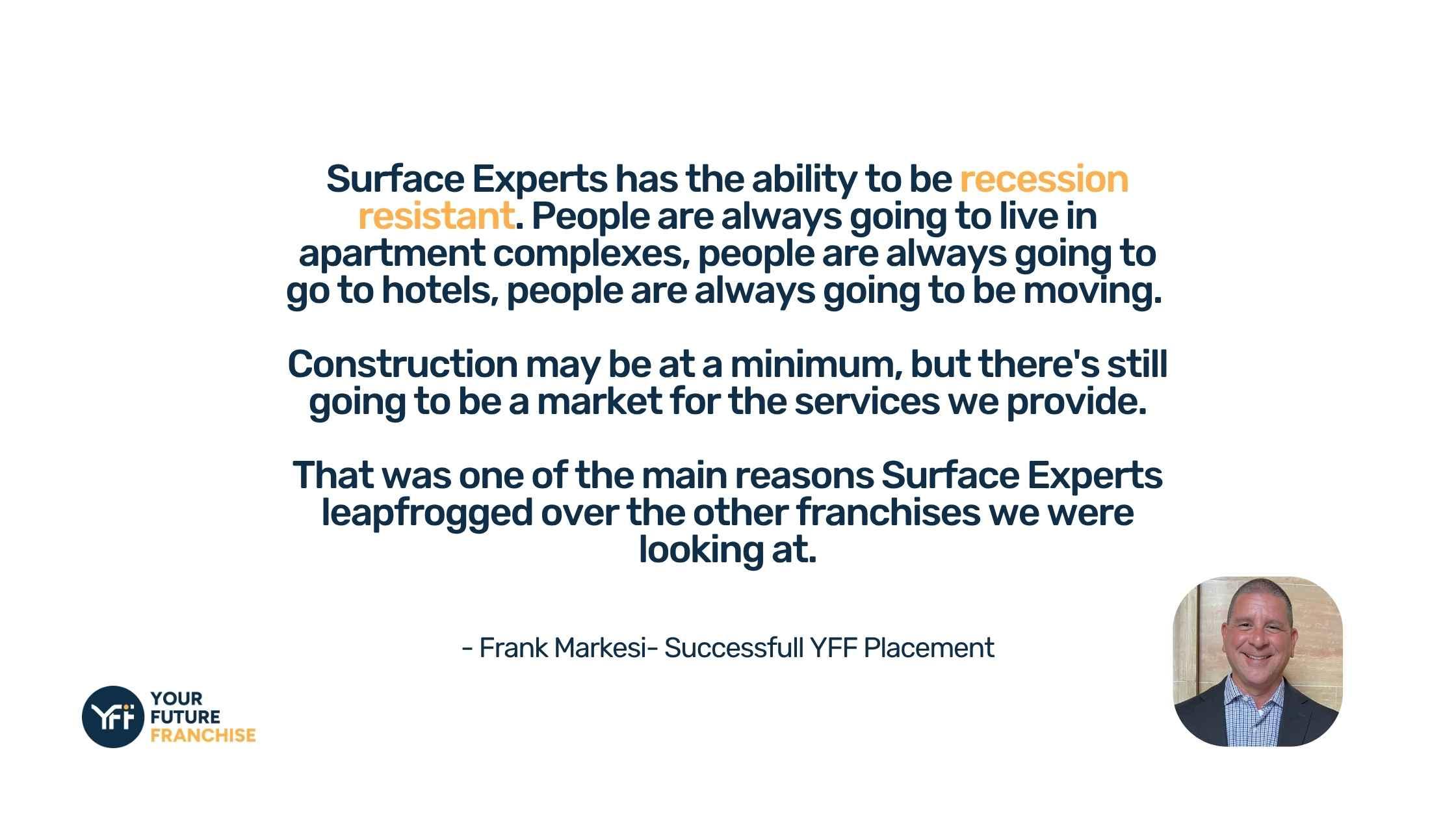
“Scott was kind of the voice of logic through the process,” Frank says. “He helped us rationalize some of our concerns and put certain fears to bed.”
Frank understood there would always be risk involved with business ownership. What mattered was reducing unnecessary uncertainty and making informed decisions instead of emotional ones.
“At the end of the day, there’s still risk,” he says. “But if you can mitigate it, control it, and understand it properly, you’re in a much better place.”
That is exactly how Frank and Carrie feel now.
What Franchising Has Already Given Frank
Frank is still early in his ownership journey. He is building the business, learning constantly, and adjusting as he goes.
But even at this stage, one thing already feels completely different.
“I want to make choices for me,” he says. “I don’t want somebody else making them for me anymore.”
That sense of ownership and control has become one of the biggest rewards of the entire experience.
And when asked whether he would recommend the process to somebody else considering franchising, Frank does not hesitate.
“The challenge is knowing what you don’t know,” he says. “Having somebody experienced who can guide you, understand what you’re looking for, and align you with the right opportunities makes a massive difference.”
Frank and Carrie are already thinking ahead. Once their Surface Experts location is fully established, they plan to explore additional franchise opportunities as part of a longer-term growth plan.
Why Frank’s Story Resonates With So Many Professionals
Frank’s story feels familiar because many professionals are quietly asking themselves the same questions right now.
Is my job really secure?
Do I still want to rely entirely on corporate structures that can change overnight?
What would happen if I had to start over tomorrow?
Franchising is not the right fit for everyone. But for people who want greater control over their future, the ability to build something of their own, and the support of an established franchise system, it can offer a very different path forward.
And according to Frank, having the right guide through that process changes everything.
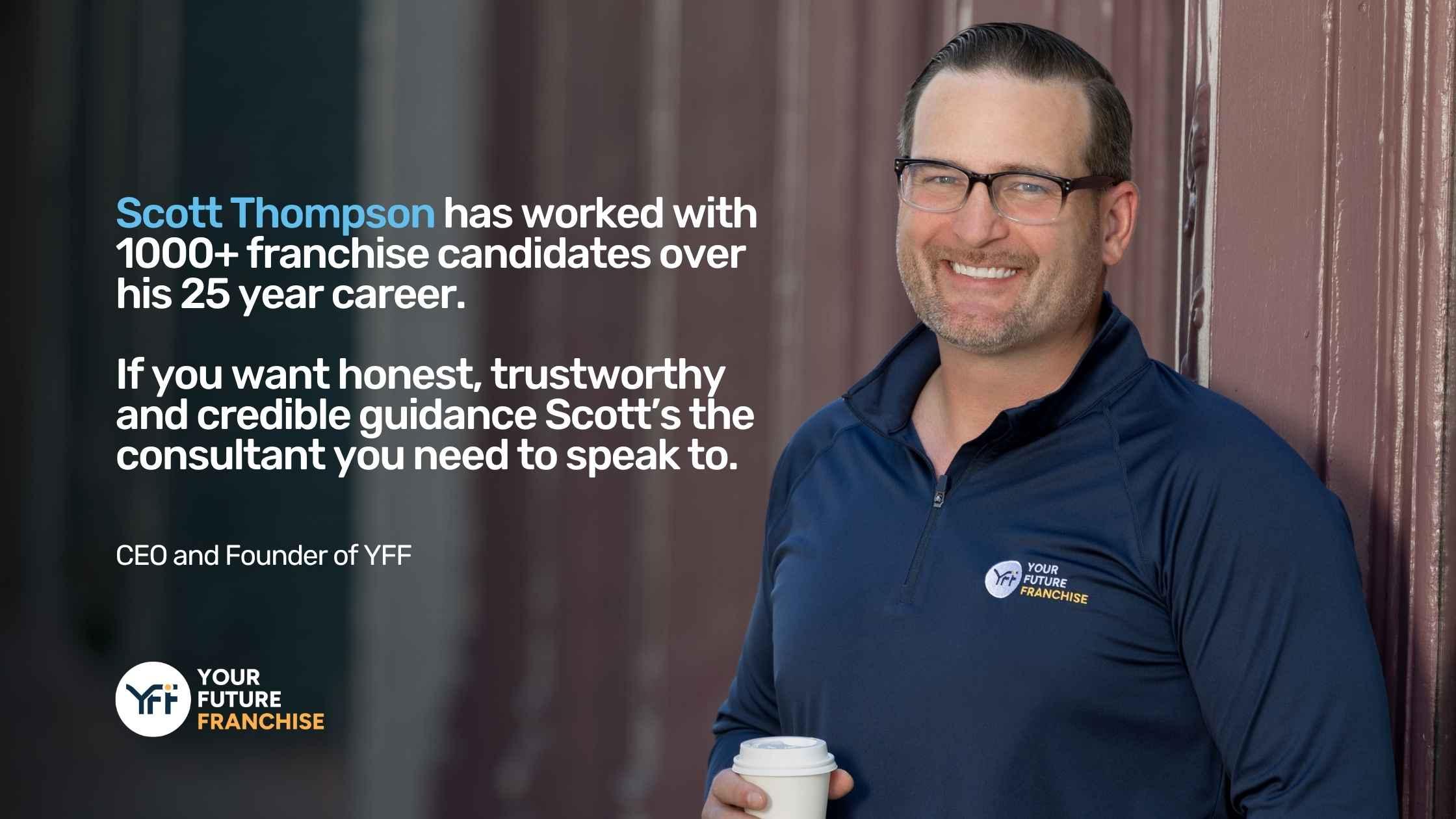
Thinking About Franchising?
Your Future Franchise offers advisory services that help professionals and prospective franchisees explore whether franchise ownership genuinely aligns with their goals, finances, and lifestyle.
As Frank puts it:
“Go with the subject matter experts. If somebody knows the industry and can guide you properly, that’s where the conversation should start.”
CTA: Book your free consultation with Scott today.
Frequently Asked Questions About Franchising
What is the initial franchise fee, and what does it cover? The initial franchise fee is a one-time upfront payment made by the franchisee to the franchisor. It typically covers the right to use the franchisor’s brand and business model, the franchisor’s trade name and intellectual property, initial training, training materials, and support services. This initial fee can vary widely depending on the franchise system.
What is included in the Franchise Disclosure Document (FDD)? Under the Federal Trade Commission’s Franchise Rule, the FDD must provide prospective franchisees with detailed information about the franchise, including franchise fees, contractual obligations, the franchisor’s financial statements and business experience, litigation history, and the support and training offered. It must be provided at least 14 days before signing the franchise agreement.
How long does a typical franchise agreement last? Franchise agreements usually last between five and thirty years. These franchise contracts outline the rights and responsibilities of both parties and usually include the franchisor’s support, renewal options, termination clauses, and the specific territory granted to the franchisee.
What ongoing fees do franchisees typically pay? In standard franchise contracts, in addition to the initial fee, the franchisee pays ongoing royalties based on a percentage of sales revenue, advertising fees, and other operational costs. These ongoing fees help support the franchisor’s brand and franchise network, and fund ongoing training and support services.
What is a business format franchise? A business format franchise is the most common type of franchise. The franchisor licenses its entire business model to the franchisee, including the brand, operating manuals, employee uniforms, training, and quality control standards for the products or services delivered at each location. Most franchises today, including recognizable brands with thousands of franchised outlets, use this business format rather than simply letting someone distribute products under a name.
How is a franchise different from starting your own business from scratch? When you start a new business on your own, you build everything yourself, including the brand and business model. With a franchise, the franchisee benefits from joining an existing franchise system run by a franchisor (the parent company behind the brand), with established brand recognition, a proven business model, and the track record of a successful franchise. The trade-off is that you pay franchise fees and follow the franchisor’s standards. It is not a joint venture or a passive investment; the franchisee still handles the day to day management of the business.
Where can prospective franchisees research franchise opportunities safely? Beyond the Franchise Disclosure Document, potential franchisees can use resources from the International Franchise Association and the U.S. Small Business Administration, which lists franchise businesses and offers loan programs for franchise investment. Speaking with current and other franchisees, and reviewing the franchisor’s reputation and litigation history, also helps protect franchisees before they commit their own money. Franchise law and the FTC’s Franchise Rule exist to protect franchisees throughout this process.