
AI proof franchises share four traits: physical work that requires human presence, real time judgment in unpredictable environments, deep local community roots, and steady recurring demand for essential services. Skilled trades, home services, senior care, children’s education, and pet care lead the category. This guide breaks down why these businesses resist automation and recessions alike, which jobs AI can’t replace, and how to match one of these franchises to your capital, skills, and lifestyle.
If you have searched for AI proof franchises, you probably watched artificial intelligence reshape your industry and decided to stop waiting for the next layoff announcement. You want a business that technology strengthens rather than swallows.
This guide walks through the categories that hold up, the human skills behind them, and the structured way to evaluate your options without hype.
What You Should Know Before You Start
What actually makes a franchise AI proof?
- Hands-on service in the real world. AI proof businesses involve physical work that requires human presence, from repairing a furnace to caring for an aging parent.
- Complex problem solving in real time. A flooded basement never presents the same way twice, and unpredictable environments demand judgment on the spot.
- Local trust. Customers prefer providers they know from their own community, which makes relationship driven service difficult to automate or replicate using AI.
- Recurring, essential demand. People need drains cleared, kids tutored, and pets cared for in every economy.
How much capital do I need?
- Most quality concepts want at least $50,000 in liquid capital and based on Your Future Franchise’s candidate experience, the sweet spot for serious candidates runs $100,000 to $200,000.
- Many franchisors look for a net worth of $500,000 or more.
- Plan working capital on top of the initial investment, and structure the numbers with our franchise investment strategy guide.
Do AI proof businesses still use AI tools?
- Yes, and the strong ones lean into them. AI can reduce administrative labor in service-based franchises, from scheduling to invoicing.
- AI can also enhance lead generation and operational efficiency, which lowers your cost to acquire customers.
- The point holds: AI can streamline routine tasks in the back office while the service itself still requires human hands. Software will never fully replace work that happens in person.
What does a franchise consultant cost?
- Nothing. Your Future Franchise gets paid by franchisors after a successful placement, similar to an executive recruiter.
- You receive guidance, prescreened franchise options, and direct franchisor introductions without a bill. See how the process works.
Are these automatically the best franchises to own?
- No category guarantees success. Fit decides outcomes, which means your leadership style, capital, and lifestyle goals matter more than any trend.
- Every opportunity deserves a full review of the Franchise Disclosure Document with a franchise attorney and a financial advisor before you commit.
Table of Contents
- Why AI Automation Is Rewriting Career Plans
- What Makes AI Proof Franchises Hard to Replicate
- Skilled Trades and Home Services: The Clearest Winners
- Health Care, Senior Care, and the Human Touch
- Children’s Education and Pet Care: Demand That Holds
- Recession-Proof Businesses Share the Same DNA
- Jobs AI Can’t Replace and the Human Skills Behind Them
- How to Choose Among the Best Franchises to Own
- Why Your Future Franchise
- Questions We Hear About AI Resistant Franchising
Why AI Automation Is Rewriting Career Plans
The corporate professionals who call us rarely fear technology itself. They fear a career built on tasks that generative AI now performs in seconds. Analysts, marketers, accountants, and middle managers have watched AI systems absorb reporting, writing, and analysis work that once justified an entire job description. White-collar jobs that once promised stability now sit closest to the disruption, while hands-on jobs keep hiring. Each layoff cycle pushes more professionals to wonder whether their job will even exist in the next decade.
The response shows up in the data. Buyers closed a record 6,915 SBA-backed business acquisition loans worth $8.17 billion in 2025, up from $5 billion in 2023. Forbes reports that many of those buyers chose plumbing, electrical, pest control, and HVAC companies precisely because those fields resist automation. The pattern repeats across industries: when a job depends on physical skill and local trust, no server farm threatens it. Professionals who spent whole careers in offices now see hands-on industries as the safer bet, and franchising gives them a proven system for the transition. Our guide to leaving corporate America for franchising covers that path in depth.
“A lot of franchises are service-based. They’re very hard to disrupt with technology. I mean, at some point we will have robots, but we’re not there yet.”
Scott Thompson
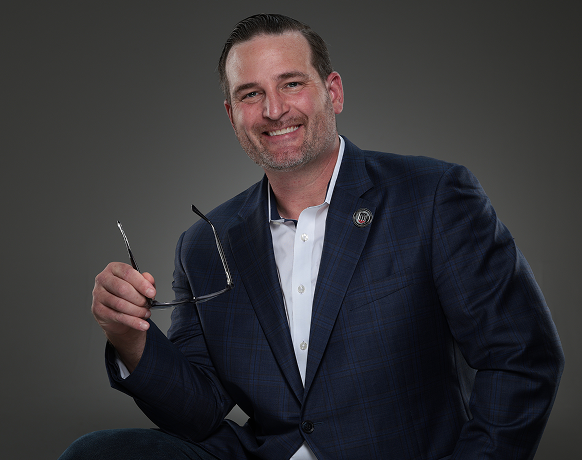
Lead Franchise Consultant, Your Future Franchise
Connect on LinkedIn
What Makes AI Proof Franchises Hard to Replicate
Software scales through screens. The businesses that resist it operate where screens end. The durable franchises typically demand complex problem solving in real time, complex physical execution, and high-touch human interaction that no model can deliver through a chat window. Those traits give them long-term viability against technology disruption in a way most digital companies cannot claim, across industries as different as restoration and tutoring.
Look for four structural moats when you evaluate any franchise:
- Physical presence. The work happens on a roof, in a kitchen, or beside a hospital bed. A physical moat also protects these franchises from online competition, because no e commerce platform can mow a lawn.
- Human judgment. Home services franchises require human judgment in unpredictable environments, where a technician diagnoses by sight, sound, and touch.
- Community roots. Franchises with a strong local presence leverage relationship driven service, and customers prefer local providers they know and trust.
- Urgency. A burst pipe at midnight needs a person in a truck. Urgent service needs remain difficult for AI to fulfill.
Trust compounds all four. High-touch services earn loyalty through the judgment and care they require, and building trust with a community over years creates income that an app cannot intercept. Franchises that depend on human care and trust sit among the least likely to face AI replacement. For example, a restoration crew that saved a family’s home earns referrals for a decade, a bond no chatbot competes with.
How AI Technology Strengthens These Businesses
Owners in these categories treat AI technology as leverage, not competition. The service van still rolls, while the back office shrinks.
- AI tools handle scheduling, dispatch, quoting, and follow up, which reduces administrative labor and repetitive tasks across service-based businesses.
- Franchisors now use AI tools for lead generation and marketing spend, which improves operational efficiency for every location.
- New technologies keep arriving, and franchise systems test the tools centrally so individual owners stay ahead without becoming technologists.
Questions We Get Asked
What is the common thread across AI proof businesses? They involve physical work that requires human presence, they demand complex problem solving in real time, and they hold deep local community roots. That combination stays difficult to automate or replicate using AI.
Will AI eventually take over these services too? AI may improve franchise operations, yet the need for human services remains. Hands-on skilled labor, empathy, and trust sit outside what software delivers, which supports long term viability against technology disruption.
Skilled Trades and Home Services: The Clearest Winners
Ask anyone who has waited for a plumber during a leak. Franchise opportunities in skilled trades stay resistant to AI automation because every house, crawl space, and electrical panel presents its own puzzle. Franchises involving hands-on skilled labor rank among the most AI resistant businesses you can own, and the demand behind them never sleeps.
The category rewards owners who lead teams rather than turn wrenches. You manage technicians, build vendor relationships, and grow a trusted local name in your territory while the franchisor supplies training, pricing systems, and marketing. The jobs inside these businesses, from technician to crew lead, resist automation because every work site differs. The owner role rewards people skills over technical skills, and corporate experience transfers directly, as we explain in our look at B2B service franchise ownership.
- Restoration, foundation repair, and mold remediation demand licensed judgment in messy, high stakes environments.
- HVAC, plumbing, and electrical services carry regulatory and safety requirements that block automation.
- Painting, roofing, and landscaping mix physical complexity with local reputation, a pairing AI cannot copy.
- Commercial cleaning and facility services run on recurring contracts, which produces steady demand from hands-on service.
💡 Pro Tip
During validation calls, ask franchisees how the brand’s technology stack changed their week. Owners in strong systems describe AI tools quoting jobs and routing crews while they focus on people. Owners in weak systems describe paperwork. The difference tells you how the franchisor thinks about the future.
Health Care, Senior Care, and the Human Touch
No family hires an algorithm to help a parent bathe, dress, and stay safe at home. Healthcare franchises project strong growth as populations age, and the U.S. Census Bureau expects every baby boomer to reach age 65 by 2030, which drives senior care demand higher each year. Take home care as an example. Healthcare services hold constant demand during recessions, because health never waits for a better economy.
The labor data tells the same story. The Bureau of Labor Statistics projects 35% growth for nurse practitioners by 2034, among the fastest rates of any occupation. Nurses and nurse practitioners keep growing in demand for a simple reason: healthcare jobs rely on empathy and human judgment, and healthcare professionals earn trust at the bedside in ways no AI systems can. When nurses hold a patient’s hand or a caregiver notices a subtle decline, emotional intelligence does work that software cannot.
- Home care and senior care franchises pair recurring service demand with deeply human work.
- Medical staffing concepts serve the shortage of nurses and other healthcare professionals.
- Wellness, recovery, and mobility services grow alongside the aging population.
Good to Know: Semi-passive models exist in senior care and home services, where a care director or general manager runs the day to day. True passivity stays a myth, though. Plan to lead your team actively, especially in year one.
Children’s Education and Pet Care: Demand That Holds
Parents cut their own spending long before they cut their children’s development. Children’s education franchises stay resilient during economic downturns because families treat tutoring, STEM programs, and enrichment as investments rather than luxuries. Great teachers power these concepts, and teaching jobs depend on human connection and inspiration, which explains why parents keep paying for real teachers even as free AI tutors multiply. If anything, anxiety about automation raises the premium parents place on human skills like creativity and critical thinking, and programs that build creative confidence in kids sell out first. The people delivering the lessons matter more than the curriculum.
The pet economy runs on a similar bond. Pet care services generated over $157 billion in 2025, reaching $158 billion according to the American Pet Products Association, and pet care spending has stayed resilient through every recent downturn, even as e-commerce reshaped the rest of retail. Grooming, boarding, and training all require a person’s steady hands, and no owner hands a beloved dog to a robot. Both industries run on bonds that software cannot form.
- Tutoring and early education franchises ride education spending that families protect fiercely.
- Youth sports and enrichment concepts build community around children, the strongest loyalty in commerce.
- The global baby product market projects 6.4% annual growth through 2033, which supports child focused services broadly.
Recession Proof Businesses Share the Same DNA
Here sits the pattern most buyers miss: the traits that make a business AI resistant overlap heavily with the traits behind recession proof businesses. Essential, hands-on, locally trusted services survive both threats, because families keep spending on needs while they cut wants. A recession tests demand the same way automation does, and the same moats answer both.
Franchises with recurring service demand carry the most resilience through a recession. Consider the categories that historically hold up:
- Grocery anchored businesses stay essential, and grocery stores historically thrive during economic downturns. The global food and grocery retail market still projects about 3% annual growth from 2024 to 2030.
- Health care and senior care services hold demand in any economy.
- Repair and maintenance services grow in a recession, because people fix what they cannot afford to replace.
- Financial guidance grows through uncertainty, and the Bureau of Labor Statistics projects 10% growth for personal financial advisors by 2034 as households seek advice their clients trust in volatile markets.
- Pet care services stay resilient during economic downturns, as decades of spending data show.
Watch Out: Recession resistant never means recession immune, and no honest consultant promises either. Review Item 19 of the FDD, ask existing franchisees how 2020 and other downturns treated them, and model your worst case before investing a dollar.
Jobs AI Can’t Replace and the Human Skills Behind Them
The research on jobs AI can’t replace maps almost perfectly onto durable franchise categories. Study the occupations projected to grow fastest and you find human skills at the center of every one. The jobs on that list run on the same skills as the jobs inside durable franchises. That overlap gives corporate professionals a compass: build your next career on what the labor market keeps rewarding.
- Healthcare roles lead the list. Nurses, nurse practitioners, and therapists do work grounded in empathy, and nurse practitioners project 45.7% growth by 2032.
- Creative careers endure. Creative jobs require emotional depth and cultural awareness, and the BLS projects 5% growth for dancers and choreographers by 2034. Creativity resists automation because creative work starts with lived human experience.
- Teachers stay essential. Classrooms run on relationships, and great teachers inspire in ways no screen can.
- The trades round out the list, from electricians to mechanics, where physical skill meets real time judgment.
From AI Proof Jobs to Business Roles That Outlast the Hype
Notice what these AI proof jobs share: emotional intelligence, critical thinking, ethical judgment, and the ability to act in the physical world. Those skills age well. AI proof careers reward the human skills AI cannot copy. The same holds for business roles. An owner who leads people, builds trust, and makes decisions that require human judgment occupies a position no model fills. Owning the business that employs essential workers often beats holding any single job, because the owner captures the value of the whole team’s work. Talk to people who made the move and a theme repeats: they stopped defending a job and started building an asset. A job protects you until it disappears, while equity keeps working either way. Most businesses in our portfolio exist exactly because franchisors proved that model unit by unit.
Questions We Get Asked
Which careers will grow fastest through 2032? Bureau of Labor Statistics projections point to nurse practitioners at 45.7% and choreographers at 29.7%, with home health, therapy, and skilled trade jobs close behind. Human centered work dominates the list.
Why do these jobs resist artificial intelligence? They depend on empathy, human connection, physical skill, and judgment under uncertainty. Generative AI drafts documents well, yet it cannot comfort a patient, teach a nervous child, or rewire a panel.
How to Choose Among the Best Franchises to Own
Lists of the best franchises to own make good reading and poor strategy. The right question never asks which franchise ranks highest. It asks which business matches your capital, your leadership style, and the life you want in ten years. Two candidates can buy the same concept in the same city and produce opposite outcomes, because fit drives execution. A career change this size deserves a real process.
Our process starts with you, not with brands. Through the seven-step Your Future Franchise process, we build your business model first, then use it as a filter across the market. Here stands the sequence:
- Define your lifestyle goals, transferable skills, risk tolerance, and role preference, including whether a semi-passive structure fits your plans.
- Confirm your financial qualification: liquid capital, net worth, and the investment range that leaves you reserves.
- Match against prescreened franchisors through the FranChoice network, comparing companies on facts rather than marketing polish.
- Validate with existing franchisees, study Item 19, and build good, better, and best scenarios from real data.
- Review the FDD with a franchise attorney and your financial advisor before signing anything. Our FDD guide shows you where the risk hides.
Checklist: Signs an AI Resistant Franchise Fits You
✓ The service stays essential in a downturn and requires people on site.
✓ The franchisor invests in AI tools that cut costs instead of ignoring new technologies.
✓ Current owners confirm recurring revenue and steady demand on validation calls.
✓ The daily owner role matches skills you enjoy using, from leadership to relationship building.
✓ The investment leaves you working capital instead of draining every reserve.
Timing questions come up constantly, so review the full timeline of buying a franchise and our advice on how to choose a franchise before you talk to any brand.
“It’s not about finding good franchises. It’s about finding the right fit for you. Clarity always comes from process, not pressure.”
Scott Thompson
Lead Franchise Consultant, Your Future Franchise
Connect on LinkedIn
Why Your Future Franchise
Plenty of voices will point you toward a trend. Very few have owned the businesses they recommend.
Scott Thompson spent 25+ years in franchising as a franchisee, a franchisor executive, and a private equity operator before founding Your Future Franchise, and he serves as a faculty member at the University of Georgia. He has watched industries absorb every wave of new technology since the 1990s, which shapes a grounded view of what AI changes and what it never will. That dual perspective anchors every recommendation toward businesses that hold up, not businesses that photograph well. The Your Future Franchise story covers the whole journey.
- We focus on fit and matching, never lead generation, and we prescreen candidates and franchisors alike to prevent costly mismatches.
- We work through the FranChoice network for direct, prescreened franchisor connections, curating a portfolio of 10 to 12 high performing brands at any time.
- Franchisors pay us after a successful placement, so candidates never receive an invoice for the consulting process.
- Our network of attorneys, lenders, and CPAs supports every candidate from first call through closing.
- We serve candidates nationally with particular depth in the Atlanta, Georgia market, and the stories on our reviews page speak for themselves.
Start with the fundamentals on our learn about franchising page, then bring your questions to a real conversation.
Ready to Build a Career AI Can’t Take?
Schedule a no-pressure consultation with Your Future Franchise. Franchisors pay for our consulting process, so there is no cost to you as a candidate, ever.
Questions We Hear About AI Resistant Franchising
Is any business truly safe from artificial intelligence?
No serious advisor promises total immunity, and you should walk away from anyone who does. Some businesses simply carry far more protection than others because the work demands physical presence, human care, and trust built over years. Focus on structural moats rather than promises, then verify everything through the FDD and validation calls with current owners. Caution beats hype in every economy.
What are the best franchises to own if I worry about AI?
Skilled trades, home services, senior care, children’s education, and pet care top the durable categories, and each one runs on services AI cannot perform. The best choice inside those categories depends on your capital, your market, and the role you want to play day to day. A consultant helps you compare real options against your own profile instead of a generic ranking. Fit beats category every time.
What jobs will AI not replace?
Occupations built on empathy, physical skill, and judgment keep growing: nurses and nurse practitioners, therapists, teachers, electricians, plumbers, and caregivers among them. Bureau of Labor Statistics projections show many of these fields growing double digits through 2032. These jobs happen in person with real people, and the pattern favors exactly that kind of work. Franchise ownership lets you build a business around exactly that kind of work.
Are AI proof careers a better bet than owning a business?
An employee holds one job and one income stream, while a business owner builds an asset that employs many people doing durable work. Ownership carries real risk and demands the ability to lead, so honest self assessment comes first. Many corporate professionals find that ownership pays them twice, through income today and equity tomorrow. The right answer depends on your capital, your appetite for responsibility, and your goals for the next decade.
Do recession proof businesses really exist?
Fully recession proof, no. Recession resistant, yes, and the evidence sits in decades of spending data across health care, grocery, repair services, and pet care. Households protect essential spending and cut discretionary spending, so businesses on the essential side of that line hold revenue better. Ask franchisees how their units performed through past downturns before you rely on any claim.
Can I run an AI resistant franchise semi-passively?
Some models support a semi-passive structure once a strong general manager runs daily operations, particularly in home services and senior care. Expect an active leadership role during the first year or two regardless of the model. Passive income claims deserve skepticism in every industry. Delegation done well creates flexibility, and it never removes the owner’s responsibility.
How much does it cost to work with Your Future Franchise?
Nothing, at any stage. Franchisors pay us when a placement succeeds, the same way companies pay executive recruiters. You get consultation, matching, prescreened introductions, and support through closing without a fee. The math only works for us when the fit works for you.
How do I take the first step?
Start with a short, no-pressure conversation about your goals, your finances, and what you want your life to look like. From there we build your business model, then filter the market against it. Candidates across the country, and especially around Atlanta, Georgia, use that process to move from curiosity to clarity in a few months. When you compare AI proof franchises through a structured process instead of a search bar, the decision finally gets easier.