

Josh had spent 14 years working at a mid-size consulting firm in Atlanta. He had a great salary, a corner office, led a team of eight people, and felt his career was moving in the right direction. But like many professionals in corporate 9 to 5 roles, he also felt his ceiling was approaching and that the future felt less certain than it once did. AI has begun to take over many operational roles, quietly reducing the need for the kind of work his team once handled. Then one morning, he read an all-staff email about “operational restructuring” and realised the moment he had been quietly expecting for the better part of a year had arrived.
Josh is not alone. White-collar professionals across the country are stepping away from corporate employment to explore new paths, and many begin looking at franchising as a serious option.
Franchise ownership offers more control, more flexibility, and a clearer link between effort and outcome compared to traditional corporate roles. Scott from Your Future Franchise works directly with professionals at this turning point, helping them understand what the shift from corporate employment to franchise ownership actually involves and whether it aligns with their goals and circumstances.
Key Takeaways
- For those wondering how to get out of corporate America, franchising has become a compelling alternative.
- White collar workers are leaving corporate jobs to own and operate franchises.
- Corporate skills like managing teams and client relationships carry over into franchise ownership.
- Top franchise ownership opportunities favor candidates with structured thinking and operational experience, suiting corporate professionals.
- Franchise ownership means facing financial risk that must be rigorously assessed.
- Franchising creates a defined path to ownership, so you’ll spend less time figuring things out from scratch.
Why Corporate Professionals are Looking at Franchise Ownership Opportunities
Corporate America has been shedding roles at a pace that has even unsettled seasoned professionals who thought they didn’t have to worry about it. Jobs that seemed safe only five years ago are now being cut or automated as organizations restructure around leaner operations. The previously unspoken deal between workers and employers has quietly disappeared. Working diligently and staying loyal is no longer the same guarantee of keeping their seats that it used to be.
As a result, employee trust among college-educated professionals has dropped significantly, according to the 2024 Edelman Trust Barometer. Most said that they no longer believe their organization prioritizes their long-term wellbeing. Even experts who’ve spent years accumulating the right knowledge and skills can find themselves on a corporate restructuring list. For them the question changes from whether they should leave corporations to when they should make the move.
Learning about franchise ownership addresses the needs that corporate jobs have stopped meeting. Income is tied to your own effort, and you have real equity instead of merely receiving a paycheck. You’ll be able to run something that actually belongs to you.

How Corporate Skills Translate to Franchise Ownership
There’s a mistaken assumption that franchise ownership requires a completely different kind of person than someone who has spent their life in a corporate environment, but that’s not true. The same skills that make a capable corporate professional are exactly the ones that make a capable franchise operator.
Think about what franchise owners do day to day. They manage staff, track margins, handle vendor relationships, train new hires, and ensure consistent quality. This will be familiar ground for someone with corporate experience in various disciplines, such as management, finance or operations. Only the context is different.
Owning a franchise comes with much more personal accountability. In a corporation, a bad quarter usually results in a tough conversation with a senior manager, resulting in a commitment to turn things around. If you own a franchise, it directly affects your personal income. While that’s certainly not a reason to avoid franchise ownership opportunities, it does mean that you need to go in with your wits about you and your eyes wide open.
Franchise Versus Corporate: An Honest Comparison
Many professionals who start thinking seriously about franchise ownership have already begun calculating the trade-offs. They know what their current role pays, their potential career trajectory, and what they’re trading these for by opting to explore franchise ownership opportunities. However, they often lack an equally clear picture of what franchise ownership actually involves, and how franchise agreements work.
Working Under a Corporate Umbrella
Corporate employment offers predictable income, defined responsibilities and low personal financial exposure. When a quarter goes sideways, your own money isn’t on the line. At the same time, you’re not developing something that belongs to you. Crucially, your continued employment depends on decisions made by people whose priorities may not match yours.
The Critical Responsibility Switch
What often surprises professionals making the switch is how much this identity shift matters. In corporate life, your title tells people who you are, what you do and where you fit. None of this exists with franchise ownership. You are responsible for everything from the lease to staffing, to ensuring that the bathrooms are clean. That’s why shedding the corporate structure feels like a relief for some, while others need to put in effort to adjust their mindsets.
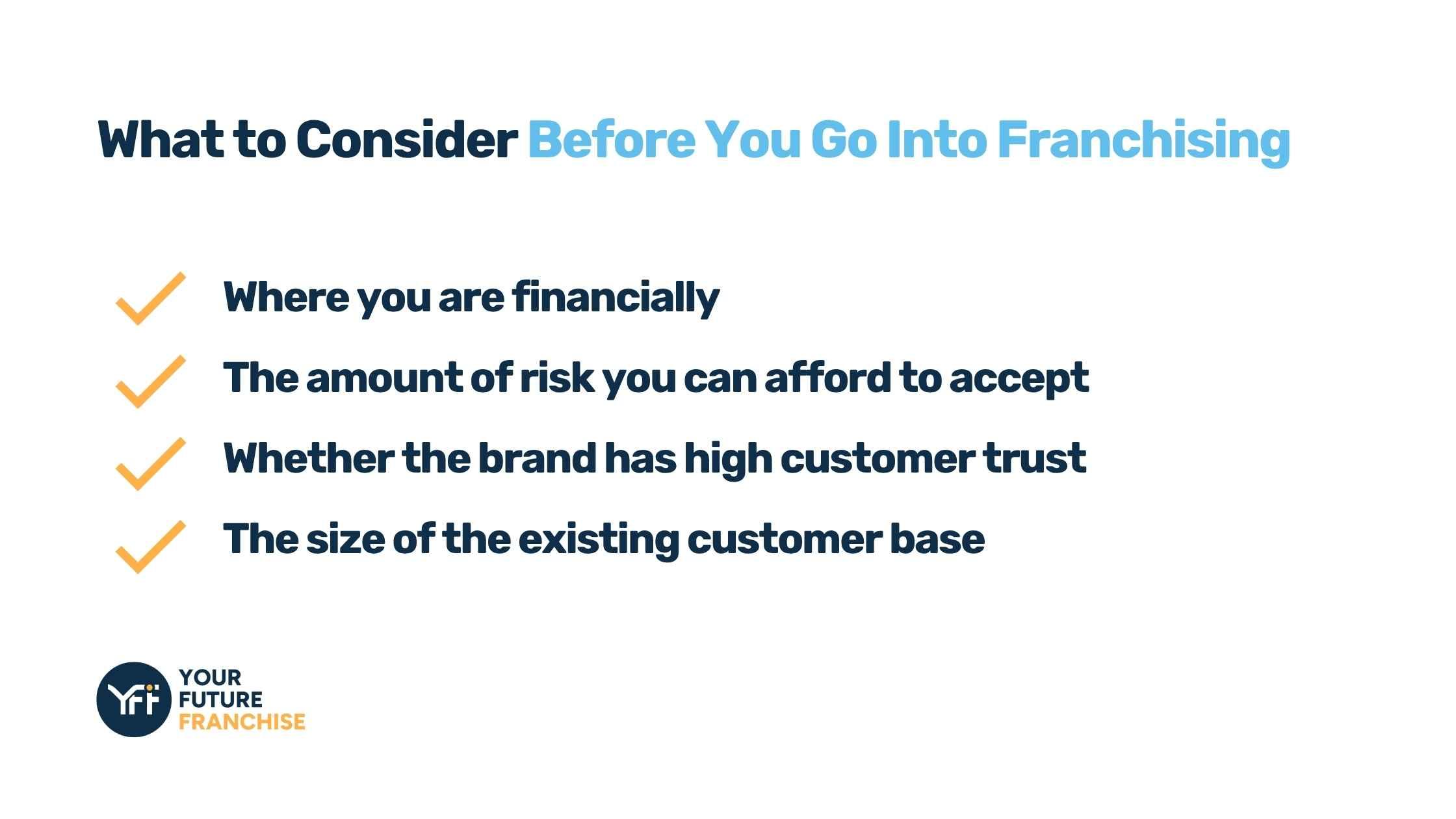
Franchise opportunities span various sectors depending on interests and investment tolerance. When considering your options, carefully consider these aspects:
- Where you are financially.
- The amount of risk you can afford to accept.
- Whether the brand has high customer trust.
- The size of the existing customer base.
Your franchise choice must also fit in with your lifestyle if you want to be successful. If it doesn’t, you may lack the motivation to persevere.
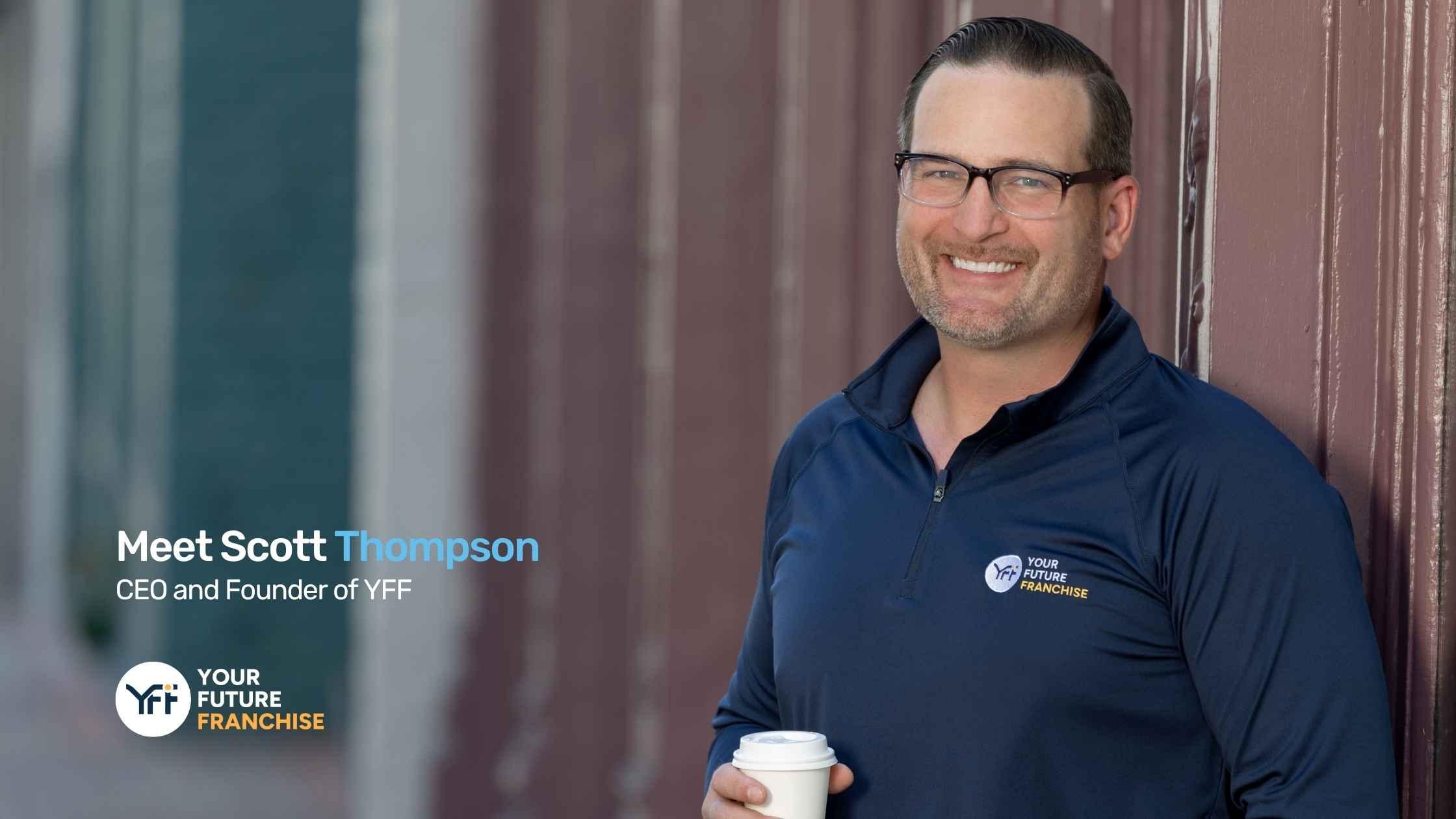
Scott brings over 25 years of experience across every side of the franchise landscape. He has worked as both a franchisee and franchisor, including within multi-unit operations, giving him a rare, end-to-end understanding of how franchise systems are built, scaled, and operated. His experience in franchising is second to none, and it directly informs how he guides candidates through the evaluation process today.
What Top Franchise Opportunities Look Like for Corporate Professionals
It’s important to understand that not every franchise suits a corporate background. The ones that tend to work well share aspects of management and leadership and run on established systems.
Their financial models are also usually understandable if you have the right background. If you don’t understand them, speak to a franchise consultant like Scott before signing anything.
Top Franchise Opportunities for White Collar Workers
The best franchise opportunities for former corporate employees are most often found in sectors like:
- Professional services
- B2B staffing
- Home services
- Health and wellness
These can all create recurring revenue, and they suit people who want to apply their corporate skills in a well-structured personal business. These sectors often build their franchisee support systems based on this kind of corporate experience, and these franchise opportunities show resilience across economic cycles.
How to Identify Robust Franchise Ownership Opportunities
Strong franchise systems differ from weak ones at the franchisor level. A well-run system has honest financial disclosure and a track record you can verify by talking to people already in it. Franchisors who pressure candidates to decide quickly, obscure fee structures or can’t produce franchisees willing to speak candidly should be ignored, regardless of how polished the pitch is.
Gather Information from Existing Franchisees
Pay particular attention to what existing franchisees say about the first twelve months. Franchise profiles may include testimonials and success stories, but you should still verify those claims through direct conversations. That window, before the business has found its rhythm and before you’ve built a reliable customer base, is where most of the hard lessons are learnt.
Franchisees who’ve been through it are usually candid if you ask the right questions:
- What did they get right from the beginning?
- What took them longer than expected?
- What they would do differently if they were to start again?
Such conversations are worth more than any presentation a franchisor puts in front of you.
The Benefits of Franchising for White Collar Professionals
Starting a business from scratch means building everything yourself. That sounds appealing to a lot of people in theory. In practice, however, many independent businesses can stall because the operational work of building infrastructure from the ground up leaves little time to actually run the business.
Franchising sidesteps most of that. You’re entering a system that has already been tested, refined, and documented. The training is structured and the marketing framework already exists, along with supplier relationships. For a corporate professional used to working within established structures, this creates a familiar environment that doesn’t feel like you’re starting from a blank page.
A Comprehensive Support System
In corporate life, you have colleagues, managers, and institutional knowledge around you. When you go out on your own, that disappears, but franchising preserves a version of it. Most franchisors provide ongoing operational support, peer networks of other franchisees who’ve solved the same problems, and direct access to a team whose job is helping your location succeed. For professionals who thrive with structure and collaboration, this matters more than most realize.
Accelerated Business Growth
Then there’s the question of speed. An independent startup can take years to develop consistent revenue. Franchise businesses tend to reach operational stability faster because they work with a proven model that’s been tried and tested many times over. That’s important when you’re no longer earning a salary and need your business to provide financial returns.
Atlanta Franchise and Business Opportunities: A Market Worth Understanding
For professionals based in the south-east, Atlanta franchise opportunities represent a particularly attractive segment of the broader market. Atlanta is one of the fastest-growing major metro areas in the United States, with a diverse economy, a strong small business culture, and a population that has been expanding consistently for more than a decade. This creates sustained demand across virtually every franchise service sector.
Why Atlanta is a Prime Franchise Location
Atlanta is also a city with a strong entrepreneurial culture that suits franchisees. These local market conditions create plenty of compelling franchise ownership opportunities for former corporate professionals. Scott is one of the leading franchise consultants in Atlanta, and he knows the reality on the ground.
Atlanta Holds a Growing Consumer Demographic
Demographic growth creates favorable conditions for new franchise owners. A larger population means a larger potential market for customers. A growing professional class means increasing demand for all kinds of services, including home maintenance, personal care, B2B support, and health and wellness. As we’ve noted, franchise businesses are particularly well-positioned to deliver in these areas.
The Financial Realities: What To Understand Before You Commit
Franchise ownership means putting your own money on the table. Initial investments vary widely. Some service-based concepts come in under $100,000, while fast casual and quick-service food and beverage franchises typically require high upfront capital and can run into several hundred thousand dollars. That covers the franchise fee, startup costs, equipment or inventory, and working capital to carry the business through its early months.
Operational Costs and Reserve Capital
Ongoing costs include royalty payments, which are typically a percentage of gross revenue, as well as marketing fund contributions. You can’t avoid these. The question to ask is whether the economics of the specific franchise you’re looking at will still provide a solid return after these costs are paid.
Former corporate professionals are usually well versed in this. It’s effectively the same exercise as evaluating a business unit at work. A particular point with a franchise is not to underestimate the working capital you’ll need. Franchise businesses can take time to establish. It’s very important to have enough in reserve to carry your business through this initial phase, without financial pressure forcing bad decisions. This is what separates successful first-year operators from struggling ones.
The Psychological Aspect
The mental load of that early period is real too. When revenue is still building and costs are fixed, every slow week feels agonizing. Professionals who’ve spent years in corporate environments are used to a paycheck arriving regardless of what the month looked like. Franchise ownership doesn’t work that way, and the adjustment takes some getting used to. The franchisees who navigate that period best tend to be the ones who planned for it honestly rather than modelling only the upside.
How an Expert Franchise Consultant Helps
A good franchise consultant walks you through financial models for specific opportunities, and flags where projections are built on real franchisee data rather than optimistic modelling. For a closer look at how franchise costs actually break down, you can rely on Scott to cover everything in detail for you.
Avoiding Costly Mistakes and Pitfalls with the Right Franchise Guidance
Many corporate professionals make the mistake of evaluating franchise ownership opportunities like a job search. They may research a few brands, read the required material, perhaps attend a webinar, and then make a call. They could visit large online platforms designed to help potential franchisees. Franchise Direct connects potential franchisees with opportunities globally, for instance.
What they might miss in all of this is that the franchise buying process is structured differently and that getting it wrong can cost real money.
Scott Helps You Dig Beneath the Surface of Franchise Marketing Pitch
Scott’s guidance provides expert insight and direction to walk you through the process. He helps you separate franchise marketing materials from reality so you can understand how the business performs in real-world conditions. This includes looking into day to day operations, evaluating how support is delivered, and assessing whether franchisee outcomes match the story being told.
Scott always emphasises that the right questions matter. He encourages speaking with existing franchisees in a structured way, as these conversations can reveal insights that don’t appear in brochures or presentations, including aspects such as workload expectations and actual profitability experience.
With Scott’s guided approach, you are able to compare opportunities side by side with a clearer picture of what ownership would truly look like.
Final Takeaway
The shift in corporate America isn’t temporary, it’s a permanent move to a new reality white collar workers now face. Professionals who come out of it well are generally the ones who decided early that their future didn’t have to depend on what their employer chose to do next. Franchise ownership opportunities offer a proven route to business ownership that suits the skills corporate careers create.
Owning a franchise involves real money, a real change in your relationship with financial risk, and a willingness to build something over time. For the right person, with the right guidance, it becomes a very worthwhile path to follow.
Working with a franchise consultant like Scott gives you clarity in a space that can often feel overwhelming. Whether you are exploring franchise opportunities in Atlanta or elsewhere, the focus is not on pushing a deal, but on understanding fit. Scott helps you step back, assess your position, and identify whether franchise ownership aligns with your goals, experience, and financial capacity, before narrowing in on the right direction.
Book a Free Consultation with Scott at Your Future Franchise.
Frequently Asked Questions
How can potential franchisees protect their investment when choosing a franchise?
The Franchise Disclosure Document (FDD) is crucial for analyzing franchise opportunities. Protecting your investment involves thorough due diligence, including reviewing the FDD, speaking with existing franchisees about their experiences, and understanding all financial obligations such as royalty fees and marketing contributions. Working with an experienced franchise consultant can also help you make informed decisions based on real franchisee data and market trends.
What role does technology play in modern franchise ownership?
Technology is increasingly important in franchise operations, allowing owners to streamline management tasks, improve customer engagement, and track business performance. Many franchises provide proprietary technology platforms to support marketing, training, and operational efficiency, which can be a significant advantage for entrepreneurs transitioning from corporate environments.
How important is passion when choosing a franchise to invest in?
Passion plays a crucial role in franchise success. While the franchise system provides a proven business model and resources, and franchise ownership can be one of several strong business opportunities, when you buy a franchise the right personal fit still matters as much as the numbers. Your personal interest and enthusiasm for the industry can significantly impact your motivation and commitment.