

Franchise leadership means managing two relationships at once by upholding the franchisor’s standards while building, coaching, and motivating a local team that executes them every day. Owners who treat people management as their core job, not a side task, see differences in retention, consistency, and customer experience. Research from i4cp found that better team collaboration can lift productivity by an average of 39%. This guide covers what the owner is responsible for, the team management skills that matter most, how to build a strong team from the first hire, and how to motivate employees so they stay.
Franchise leadership rarely gets mentioned when you’re investigating franchise ownership, yet it holds the power to determine a considerable number of outcomes that a good system on its own can’t fix.
For executives and experienced managers transitioning from corporate leadership into business ownership, many existing management skills are transferable. However, owning the business changes the context and the level of accountability. Managing people effectively requires a clear understanding of expectations, communication, performance, and culture. My franchise consulting process considers your leadership experience, management style, and approach to business ownership before I introduce specific franchise opportunities into the discussion.
In this article, we examine the role of franchise leadership, what owners are responsible for day-to-day, and the management practices that contribute to building and retaining a strong team.
What You Should Know Before You Start
Do I need prior management experience to lead a franchise team?
- Not necessarily, though it helps. Most candidates we work with have led teams in corporate roles, and franchisors provide training on their operating systems.
- What matters more than a title is a willingness to coach, set clear expectations, and hold people accountable in a small company where every gap in performance is visible.
- I started my franchise career at 22 with no formal management training. I learned to manage a team on the job, mistakes included.
How much of a franchise owner’s week goes to managing people?
- It depends on the model. An owner-operator with employees in a brick-and-mortar location spends most of the day on scheduling, coaching, and customer issues.
- A semi-passive model with a strong general manager shifts the owner toward weekly meetings, key performance indicator (KPI) reviews, and hiring decisions.
- A 2026 Gartner survey found that managers spend roughly nine hours a week on employees’ personal and emotional concerns, so budget time for people management in any model.
Does the franchisor handle hiring and training for me?
- Many franchisors supply job descriptions, applicant tracking tools, and learning management software. Some help with recruitment campaigns.
- The hiring decision, onboarding, and daily coaching stay with you as the owner.
- Ask every franchisor about the training, HR support, and turnover playbooks that exist before you sign, and verify those commitments in the Franchise Disclosure Document (FDD).
What does it cost to get started, and what about the money side?
- Financial requirements vary widely by franchise. Many franchisors set minimum liquid capital and net worth requirements, and you should verify the total initial investment in Item 7 of each brand’s FDD.
- The initial franchise fee alone commonly runs from tens of thousands to several hundred thousand dollars, according to the Federal Trade Commission, with buildout, equipment, and inventory on top.
- Payroll for your team members sits inside working capital, so budget for it beyond the 90 days the FDD requires franchisors to estimate.
- No franchise carries a guarantee of success. Review the FDD with a franchise attorney and a financial advisor before you commit.
Table of Contents
- What Franchise Leadership Means When You Own the Business
- What a Franchise Owner Stays Responsible For
- Team Management Skills Every Franchise Owner Needs
- Building a Strong Team From the First Hire
- Effective Communication in a Franchise Team
- Motivating Employees So They Stay
- Leading a Semi-Passive Franchise Without Losing Control
- Matching Your Management Style to the Right Franchise
- Why Your Future Franchise
- Questions About Leading a Franchise Team
What Franchise Leadership Means When You Own the Business
Franchise leadership involves a dual relationship. On one side is the brand, with its operations manual, standards, and expectations for every location. On the other side is your local team, the people who serve customers, deliver the service, and open the location each morning. Your management role sits between the two, translating corporate office mandates into daily tasks your employees can act on.
That balance of corporate compliance and local execution challenges more new owners than the financial side does. The system provides a structured model with room for some local customization, and the leader’s role within it includes the following:
- Cultivate a strong local organization while upholding franchisor standards without exception.
- Turn the brand playbook into concrete tasks, schedules, and checklists your team leaders can run.
- Represent your employees to the franchisor and the franchisor to your employees, with honesty in both directions.
- Maintain brand consistency across every shift and across multiple locations once you scale.
Franchisee success depends on that translation work. A brand can provide the best systems in the industry, and none of it matters if the team members on the front line never learn why the standard exists. We have seen owners with modest capital outperform better-funded competitors for one reason: they led people well, while their peers simply administered a manual. Business success in a franchise rests on that ability far more than on the logo.
Good to Know: Global employee engagement fell to 20% in 2025, according to Gallup’s 2026 State of the Global Workplace, and manager engagement sat at 22%. A franchise owner who is visibly engaged in the business already stands apart from most managers that those employees have worked for.
What a Franchise Owner Stays Responsible For
Franchise owner responsibilities extend well beyond opening and closing procedures. Some feel familiar from corporate life, and others arrive for the first time the week you open. Most first-time owners underestimate how many of those responsibilities involve people rather than product, and how much focus each one requires.
In practice, the owner remains responsible for these areas every week:
- Financial acumen: Monitoring key metrics, labor as a percentage of sales, and profit margins, then adjusting before a slow month becomes a slow quarter.
- Hiring and training: Recruiting, onboarding, and ongoing professional development so the team performs to the brand standard.
- Operational problem-solving: Handling equipment failures, absences, or a negative review with a calm, problem-solving mindset that your team will model.
- Brand consistency: Keeping the customer experience identical whether or not you are present.
- Compliance: Following the franchise agreement, local employment law, and safety rules, with the operations manual as the baseline.
- Marketing and customer acquisition: Working the local program the franchisor provides and tracking what it produces.
- Projects: A remodel, an additional vehicle, or a new point-of-sale rollout each becomes a project the owner scopes, funds, and sees through, on top of the daily tasks.
I learned early that strong sales alone don’t create a sustainable business. During my first year as a franchisee, customer growth outpaced the operational systems and team needed to support it. The experience reinforced an important principle that continues to shape how I advise candidates today: build the right team, establish effective systems, and then focus on growth. My guide to scaling franchise growth explores how those elements work together as a franchise grows.
“I encourage people to always understand when they’re getting into a business: What am I doing as an owner every day? What’re my expectations of me? And does that align with my skills? And then who should I be hiring for the additional roles?”
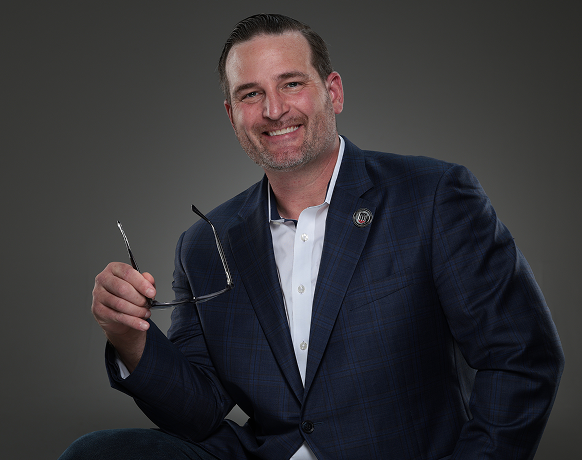
Scott Thompson
Lead Franchise Consultant, Your Future Franchise
Connect on LinkedIn
Questions We Get Asked
How do I keep multiple locations consistent? Successful franchise leaders maintain brand consistency across locations by documenting the standard once, training every manager against it, and auditing the same checklist on the same schedule at each site. Managers who expect the audit uphold the standard on the days you don’t visit.
Where do owners learn what actually works? Franchise leaders should leverage peer networks inside the system to share best practices and operational insights. Other franchisees have already addressed the staffing challenges you will face, and most are willing to share their experience. Treat those peers as resources rather than competitors.
What if the franchisor’s mandate does not fit my market? Raise it through the proper channel with data from your location, and continue to execute the standard while the conversation takes place. Franchise systems allow some local customization, and the owners who earn that flexibility are the ones who follow the rules first.
Team Management Skills Every Franchise Owner Needs
Effective team management is an important part of successful franchise ownership.
Skills such as emotional intelligence, adaptability, communication, and accountability become particularly important as an owner takes direct responsibility for a smaller team. Managing a team of 12 employees requires a different level of involvement than managing employees in a 1,200-person corporate organization.
As an owner, you’re often closer to day-to-day performance, employee concerns, and difficult conversations, without the layers of HR and management support available in a larger organization. Understanding how you lead, communicate, and manage performance is an important part of determining whether franchise ownership is the right fit for you.
The management skills we see in the strongest franchise owners include:
- Emotional intelligence, including self-awareness and empathy, to communicate well and manage different personalities.
- Adaptability, because staffing, customers, and day-to-day operations can change quickly.
- Delegation, so you can give people responsibility without trying to manage every task yourself. This becomes increasingly important as you grow beyond one location, and no other skill takes longer to develop.
- Coaching, so employees can improve, develop, and take on more responsibility over time.
- Accountability starts with yourself and setting the same standard for your team.
- Data literacy, so you can use sales, labor, and other business data to make sound decisions rather than relying on instinct.
Emotional Intelligence and Self-Awareness
High emotional intelligence remains a hallmark of strong leaders. Managers with emotional intelligence read and manage a team’s morale and conflicts more effectively than technically capable managers who struggle to interpret the people around them. Self-awareness comes first. Understand what you do well, what you tend to avoid, and how you respond under pressure, because your team will already have noticed. Emotional intelligence contributes to effective team management in small, daily ways through recognizing when a shift supervisor has become disengaged or adjusting your own tone before a demanding day affects the team.
Decision Making Under Pressure
Decision-making accelerates considerably once you own the business. In a corporate setting, a committee often reviews the decision. In your franchise, the customer is waiting for an answer. Scott describes the best franchisees as action-oriented people who don’t overanalyze, and executives who only provided strategic guidance while their teams made the operational decisions sometimes find that pace demanding. Practice making smaller decisions promptly and reviewing them weekly, which builds the judgment you’ll need before a critical decision arrives.
Management Style: Which One Fits You?
Your management style shapes the culture of the business more than any written values statement. Four common approaches appear across franchise systems:
- Democratic management involves team members in decision-making processes, which builds commitment and can slow execution.
- Transactional leaders emphasize goals and rewards for their teams, a natural fit for sales-driven concepts with clear metrics.
- Coaching leadership focuses on the personal development of team members, which suits owners who enjoy mentoring.
- Authoritative leaders set the course and expect juniors to follow, which is useful in a crisis and unsustainable as a default.
A great leader blends these approaches depending on the person and the situation. An effective leader coaches the new hire, applies a transactional scoreboard to the sales team, and becomes directive during a compliance inspection. Managers who commit to a single style get better results with some employees and lose the engagement of the rest.
💡 Pro Tip
Before you buy, write down how you would describe your management style. Then ask two former direct reports whether they would describe you the same way. Their answers may highlight strengths or gaps you had not considered and can help you determine what type of franchise team and leadership structure will suit you best.
How to Build a Strong Team From the First Hire
How to build a strong team starts with who you hire and continues with how you manage the first 90 days together. I hired friends for my first location because they seemed like safe choices, but then had to let several go and lost relationships in the process. Hire for the role rather than for comfort, and treat the first quarter as the most important part of the whole project. The success of every location that follows depends on it.
Every new group of employees moves through predictable stages. Psychologist Bruce Tuckman described them decades ago as forming, storming, norming, and performing, and the model applies directly to a franchise team:
- Forming: Polite, uncertain, and waiting for you to define the job.
- Storming: Disagreement over roles, schedules, and responsibilities.
- Norming: The group settles on shared habits and begins supporting one another.
- Performing: The team runs the standard without supervision, which frees you to work on the organization rather than in it.
Owners who anticipate the storming phase manage it calmly. Owners who take it personally often dismiss the wrong employee. Teams with clear roles experience higher levels of trust sooner, and that trust becomes the foundation for everything that follows.
Set Ground Rules Early
Ground rules establish the culture before habits form. Before the first shift, agree on how the team communicates, what punctuality means, how mistakes get reported, and how disagreements get resolved. Post the ground rules, review them in meetings, and enforce them evenly, including for yourself. Team members settle in once they know the rules apply to everyone, and team members get more involved in upholding the rules they helped create.
Hire for the Role You Actually Need
My second location only gained momentum once I found the right general manager, and it took time to get that hire right. Until then, two locations produced roughly what one had produced with me on site. Write the job description for the role, not the candidate you hope to find, and get your best current employees involved in the interview. They know what the job requires, and they recognize a good fit more reliably than a resume does.
Checklist: First 90 Days With a New Team
✓ Ground rules written, posted, and reviewed in the first team meeting.
✓ Every role has a one-page description with three measurable outcomes.
✓ Weekly meetings are scheduled with a fixed agenda and a fixed length.
✓ Franchisor training completed by every employee, not just the manager.
✓ One-on-one check-in scheduled with each team member at day 30, 60, and 90.
“Continuous learners are always great, too. They’re always learning from their mistakes. They take ownership of their mistakes, and they’re willing to be humble and be kind of empathetic to their team and build that really cool culture where everyone’s transparent with each other and trusting each other.”
Scott Thompson
Lead Franchise Consultant, Your Future Franchise
Connect on LinkedIn
Effective Communication in a Franchise Team
Effective communication reduces misunderstandings among team members and, in a franchise, it also protects the relationship with the brand. You communicate upward to the franchisor and downward to your employees, and the same communication skills serve both directions: listen first, confirm what you heard, and follow up in writing.
Clear communication leads to more consistent execution with fewer errors, which appears on the Profit and Loss Statement (P&L) as less waste, fewer remakes, and fewer refunds. Only 46% of U.S. employees felt clear about what their employer expected of them in Gallup’s January 2025 data. Most employees in the wider market operate without that certainty, and an owner who communicates expectations well holds a measurable advantage.
Clear Communication Habits That Improve Team Performance
A few habits improve communication more than any software purchase:
- Run short, scheduled meetings with an agenda, and end them on time.
- State expectations in measurable terms where you can. “Greet within 10 seconds” is more useful than “act friendly.”
- Keep open communication channels for difficult news, because a problem raised early costs far less than one discovered in a customer review.
- Explain the reasoning behind every brand standard until the newest employee can explain it to customers without prompting.
- Close the loop. When someone raises an issue, tell them what happened next.
- Lead by example. Team members communicate the way they see the owner communicate, for better or worse.
Communicating With the Franchisor
Effective communication also shapes how the franchisor works with you. Building trust and maintaining transparent communication with the corporate office results in faster responses, a better hearing for your ideas, and more patience when a report runs late. Franchisors work with hundreds of owners, and the ones who communicate clearly, early, and professionally are the first considered for new territories and pilot projects. Treat every report as a small project with a deadline, and the company will see you as a partner rather than a problem. Managers at the home office recognize a reliable partner quickly, and they allocate their support and resources accordingly.
Watch Out: Group text threads are a poor substitute for meetings. Important changes to schedules, pricing, or procedures require a face-to-face conversation or a written notice with confirmation, or you will spend your week correcting work based on messages people never saw.
How to Motivate Employees So They Stay
How to motivate employees in a franchise comes down to three levers: clear goals, honest feedback, and recognition that is sincere. Employees who feel valued leave their jobs far less often, and turnover costs a franchise owner twice, once in recruiting and again in the customer experience while the new hire learns.
The research supports this. Workhuman and Gallup tracked more than 3,400 employees and found that those who received high-quality recognition had left their jobs 45% less often two years later. A franchise leader who focuses on the local employee experience reduces turnover without increasing the recruiting budget.
Set Goals People Can See
Set goals at the team level and the individual level, and post progress where everyone can see it. Common goals give team members a reason to support one another, and they give managers a key reference point when tasks compete for attention. Individual goals give each person a reason to invest in their own performance. Companies focusing on performance management outperform their peers 4.2 times more often, according to McKinsey, and a franchise gives you the metrics to manage performance from week one. Managers in the corporate world often inherit goals. As the owner, you create them, and you carry the responsibility to explain them.
Positive Feedback That Actually Motivates
Positive feedback increases employee motivation and reduces turnover, as long as it stays concrete and timely. General praise offered in passing has little effect. Recognizing a particular outcome, such as an employee who resolved a customer complaint and secured a rebooking, within the same day has a lasting impact. Clear expectations and regular feedback improve team performance and accountability far more than annual reviews alone. Gallup found employees with quarterly progress checks felt engaged 90% more often than those reviewed once a year.
Recognition takes many forms, and some cost very little:
- Autonomy: Employees with autonomy report higher job satisfaction, according to University of Birmingham research, so allow strong performers to own a task from start to finish.
- Growth: Offer a course, a certification, or a path to shift supervisor. Professional development retains ambitious people, and it counts as an improvement you can measure.
- Food: 57% of employees in an ezCater survey named free or subsidized food as their most appreciated perk, which makes a team meal a cost-effective retention tool.
- Public recognition: Recognize the individual in front of the team and correct in private.
- Compensation: Bonuses tied to metrics the employee controls, paid promptly.
Questions We Get Asked
Do performance reviews still matter? Yes, though only 1 in 5 employees told Gallup their reviews felt fair, transparent, or inspiring. Keep the review and add short, frequent check-ins so nothing in it comes as a surprise.
How much feedback do managers actually give? Less than employees need. Only 39% of employees in Gartner’s 2026 survey agreed that their manager provides effective developmental feedback, so a franchise owner who provides it weekly holds a clear advantage as an employer.
What do employees want most from their leader? Certainty about expectations. Most employees want to know what the organization expects, how their work counts, and what happens next in their careers. Answer those three questions consistently, and a small company has just what it needs as an employer, because a company that communicates well can compete with larger employers on something other than pay.
Leading a Semi-Passive Franchise Without Losing Control
Many candidates come to us hoping for passive income. Scott owned apartment buildings and still had to manage the property manager who ran them, so we state it plainly: no business runs itself. A semi-passive franchise trades your daily presence for a strong general manager, tight KPIs, and a management structure you design and inspect. Hiring that manager becomes the most critical decision of the first year, and the key to every task you intend to delegate.
The passivity of any franchise depends on how well you manage people through systems rather than through your own long hours. Owners who achieve it share a few habits:
- Job descriptions, defined tasks, and KPIs for every role are reviewed in a fixed weekly meeting.
- Standard operating procedures that the team can run without a phone call to the owner, whether the day brings a routine shift or a special project.
- A culture of accountability was created before the second location, not after.
- Willingness to let the team do the technical work slightly differently than you would, as long as the expected outcome holds.
That last habit presents the greatest difficulty for owners arriving from corporate roles. People accustomed to doing the work themselves struggle to let go, and the owner who redoes every task limits the business to the capacity of one individual. Delegation, backed by coaching and inspection, creates the freedom most candidates wanted in the first place. An effective leader with that freedom also carries the responsibility to inspect what they expect, every week, without exception. Our piece on B2B service franchise ownership shows how that looks in a mobile service model rather than a fixed location.
“It’s really about being a great manager of people and helping other people be successful. When you can do that, and you can lead a team, then you have more passive income than maybe others, and you’re able to scale.”
Scott Thompson
Lead Franchise Consultant, Your Future Franchise
Connect on LinkedIn
Good to Know: Scott advises new owners to open one location, learn the unit model, and have a team executing at a high level before adding a second. A team that has not yet matured, combined with an owner dividing time between sites, often produces the same total revenue across two locations that one would produce alone.
Matching Your Management Style to the Right Franchise
Franchise leadership looks different in a single-unit fitness studio, a home services territory with six vehicles, and a solo consulting concept with no employees at all. The most important factor in choosing a franchise, in our experience, comes down to the fit between the manager you have become and the management the model demands. The fear of choosing incorrectly keeps capable people in corporate jobs for years, and a structured process addresses that fear more effectively than reassurance.
Our 7-step process at Your Future Franchise puts your management profile ahead of any brand presentation:
- An introductory call and a confidential questionnaire capture your goals, capital, and risk tolerance.
- A two-hour consultation examines role preference, people skills, sales ability, and how large a team you want to manage.
- We build a business model together and align on it before any brand is introduced.
- We introduce two to four prescreened brands whose ideal franchisee profile matches yours.
- Brand investigation, validation calls with existing franchisees, and FDD review with your attorney follow.
That prescreening protects both sides. A brand that requires a hands-on operator is not the right match for a candidate seeking a semi-passive model, and we would rather identify that mismatch early in the process than after closing. Our guide on how to choose a franchise covers the self-assessment questions in depth, and candidates comparing operating models often begin with restaurant franchise vs. home services franchise.
💡 Pro Tip
Ask the franchisor which learning management system, hiring tools, and turnover playbooks come with the brand. Some franchisors help you hire and train, and a system designed to handle high-turnover roles takes considerable pressure off a first-time owner.
What the FDD Says About Leading People
The Franchise Disclosure Document tells you a great deal about the demands of a brand. Item 11 describes the training and support the franchisor provides, and Item 15 explains whether the owner must participate in daily operations.
Item 20 lists current and former franchisees you can call to ask about staffing reality, for example, how long it took them to find a dependable manager. Read those items with a franchise attorney, review the numbers with a financial advisor, and use our FDD guide to understand every section before you commit to anything.
Questions We Get Asked
Which matters more, the brand or the owner? Both. The brand is more visible, and the owner has a greater impact. The brand supplies the system, and the owner’s daily management determines whether the team executes it.
Can I run a franchise while keeping my job? Some semi-passive models allow it with a strong general manager in place, though the owner still handles weekly oversight, hiring decisions, and vendor and landlord relationships. Franchising still requires daily oversight from someone, and you decide who provides it.
What if I have never managed a team? Start with a concept where the franchisor’s training and support carry more of the load, and consider a single-unit agreement before a multi-unit agreement. Successful franchise leaders actively engage in training and development for their teams, and the franchisor’s program gives you a place to start.
Work With Scott Thompson at Your Future Franchise
Advice on managing people carries more weight when it comes from someone who has hired, dismissed, and coached employees in his own franchise.
Scott Thompson spent more than 25 years as a franchisee, a franchisor executive, and a private equity operator before founding Your Future Franchise. Over the course of that career, he grew one organization from five employees to 125 while overseeing multiple brands. He now serves as a faculty member at the University of Georgia and works with candidates through the FranChoice network, which reports introductions resulting in more than 25,000 franchise locations placed.
Candidates nationwide, and especially in the Atlanta, Georgia market, choose Your Future Franchise for reasons tied to management fit:
- We prescreen candidates and franchisors alike, so an owner who wants a small team is never placed in a 40-employee concept.
- We focus on fit and matching rather than lead generation, working from a curated portfolio of 10 to 12 high-performing franchise brands whose cultures we know well.
- We work through the FranChoice network for direct, prescreened franchisor connections.
- Our no-fee model means franchisors compensate us when an introduced candidate purchases a franchise, so candidates never pay a consulting fee. Independent attorneys, accountants, and lenders charge for their own services.
- We connect candidates with attorneys, lenders, and CPAs who support the process through closing and beyond.
- The stories on our reviews page and the Your Future Franchise story show how that support turns into placements that last.
Ready to Lead a Team of Your Own?
Schedule a no-pressure, no-obligation consultation with Your Future Franchise. Franchisors compensate us when an introduced candidate purchases a franchise, so you never pay a consulting fee.
Questions About Leading a Franchise Team
What does a franchise owner actually do all day?
It varies by model, and people management fills more of the day than most expect. A typical owner-operator reviews the previous day’s numbers, confirms staffing, coaches one or two employees, resolves a customer issue, and works the local marketing program. Semi-passive owners compress that into a weekly rhythm with their general manager. In every model, the owner sets the tone the team follows.
Does a franchisee need natural management talent to succeed?
No. Scott started at 22 with no management training and learned by hiring friends, letting some go, and building systems that allowed others to replicate what he did well. Management skills develop through practice and honest feedback from the people you manage. A franchisor’s training program and a peer network of other owners shorten the learning curve considerably, and success with a first team tends to carry forward to the second.
How do I motivate employees in a franchise on a tight budget?
Start with what costs nothing: clear goals, weekly feedback, public recognition, and real autonomy for people who earn it. Research from Workhuman and Gallup links high-quality recognition to 45% lower turnover, which saves far more than a bonus pool. A team meal, a certification course, or a path to shift supervisor all motivate more than a small raise given without acknowledgment.
How do I handle an employee who ignores brand standards?
Address it the same day, in private, and connect the standard to the customer outcome it protects. Most people respect a rule once they understand the reasoning behind it. Document the conversation, set a clear expectation with a date, and follow up. If it continues, the franchise agreement and your operations manual usually define the process, and your franchisor can advise on next steps.
What team management skills transfer from corporate to franchise ownership?
Most of them, with a change in scale. Coaching, delegation, decision-making, and communication skills all carry over. What changes is the speed of decisions, the absence of an HR department, and the fact that every payroll dollar comes from your account. Corporate managers who ran a P&L and managed frontline teams tend to adjust fastest.
How many employees does a typical franchise need?
Anywhere from zero to several dozen. Some consulting and B2B service concepts run with only the owner. A home services territory might carry four to eight technicians. A restaurant or fitness studio can require 15 to 40 employees across shifts. Item 15 of the FDD and calls with existing franchisees tell you what a given brand really requires, and we match candidates to the team size they want to manage.
How does effective communication with the franchisor affect my business?
More than most owners realize. Franchisors notice who reports on time, who raises problems early, and who follows the process, and those owners receive faster support and earlier consideration for new territories. Transparent communication also protects you when disputes arise, because a written record of every conversation exists. Our article on resolving franchise disputes covers what happens when communication breaks down.
Can a semi-passive franchise really run without me?
It can run without you on site daily, but not without you managing. You still hire and coach the general manager, review KPIs weekly, and handle vendor and landlord relationships. Owners who create a culture of accountability and discipline before stepping back tend to succeed at it. Owners who step back first and address problems later usually find themselves back in the business full time.
What comes first if I want to own and run a franchise?
Begin with an honest self-assessment before you evaluate brands. Write down what you like doing every day, how large a team you want to manage, and what your family needs financially, then book a 20-minute call with us. From there, the confidential questionnaire and consultation build a business model that filters hundreds of brands down to a few that fit. Clear thinking about franchise leadership, before any brand enters the picture, turns a leap of faith into a plan you can execute.