Quick Answer
A corporate career pays you a predictable salary in exchange for control over your time, your income ceiling, and your job security. Buying a franchise trades that predictability for equity in a business you own, run inside a proven system, with real fees, real risk, and real work attached. On this page we weigh the franchise vs corporate decision across income, control, risk, cost, and lifestyle, then show you how to tell which one fits your life before you commit capital.
The franchise vs corporate question usually shows up around year 15 of a career, right after a layoff round or a promotion that changed nothing about your life. You want a plain comparison from people who have sat on every side of the table, not a sales pitch, and that matches how we work at Your Future Franchise. Our lead consultant, Scott Thompson, spent 25 years as a franchisee, a franchisor executive, and a private equity operator before he started guiding candidates through this exact decision.
What You Should Know Before You Start
In the franchise vs corporate trade, do I stop working for someone else?
- You own the business, the assets, and the outcome. Nobody can lay you off.
- You also sign a franchise agreement that binds you to the franchisor’s operations manual, brand standards, and approved suppliers.
- The FTC puts it bluntly: a franchisor may control your location, your territory, your advertising, and what your sign looks like.
- Think of it as owning the outcome while renting the playbook.
How much money do I need before buying a franchise?
- Financial requirements vary widely by franchise. Many franchisors set minimum liquid capital and net worth requirements, and the total initial investment should be verified in Item 7 of each brand’s FDD.
- According to the FTC’s guide to buying a franchise, the initial franchise fee alone typically runs from tens of thousands of dollars to several hundred thousand, with buildout, equipment, and inventory on top.
- In our consulting practice, candidates with $100,000 to $200,000 in available liquid capital generally see a broader range of opportunities to evaluate.
- Every candidate should confirm the numbers with a financial advisor before signing anything.
Will I earn more as a franchisee than in my corporate job?
- Nobody can promise that, and anyone who does breaks the rules. Franchisors may only share financial performance data inside Item 19 of the FDD, and no franchise carries a guarantee of success.
- Your income depends on the brand, your market, your team, and your own execution.
- The honest exercise involves building a family budget, then modeling good, better, and best scenarios with the franchisor and current franchisees.
How long does the commitment last?
- Franchise agreements typically run for 10 years or more, and renewal never happens automatically.
- The franchisor can change terms at renewal or decline to renew, which makes the agreement worth a franchise attorney’s review before you sign.
- Compare that horizon to a corporate role, where your employer can end the relationship in a single meeting.
Do I pay a consultant for help?
- No. Franchisors compensate Your Future Franchise when an introduced candidate purchases a franchise. Candidates never pay us a consulting fee.
- Independent attorneys, accountants, and lenders charge for their own services, and you should budget for them.
25+
Years Scott Thompson has spent as a franchisee, franchisor, and consultant
845,000
Franchise establishments projected in the U.S. for 2026 (IFA)
14 Days
Minimum time you must hold the FDD before signing or paying (FTC)
7 Steps
In the Your Future Franchise consulting process, from intro call to launch
Table of Contents
- The Real Trade-Off in the Franchise vs. Corporate Decision
- The Corporate Career, Weighed Honestly
- Franchisee Benefits and Drawbacks
- Why a Proven System Beats Starting From Scratch
- Initial Investment and Ongoing Costs
- The Fear Behind Leaving Corporate (and How to Manage It)
- How We Prescreen the Match
- Who Franchise Ownership Fits (and Who It Does Not)
- Why Your Future Franchise
- Frequently Asked Questions
The Real Trade-Off in the Franchise vs. Corporate Decision
Strip away the motivational posters and the comparison comes down to one trade. Franchise owners and corporate employees both work hard. They just work toward different balance sheets. Corporate employment gives you comfort: a salary that lands every two weeks, benefits, and a role someone else defined. Franchise ownership gives you freedom: control over your calendar, your team, and an asset that can grow in value, with the bill for that freedom paid in capital, effort, and risk.
Comfort has quietly gotten less comfortable. Employers announced 529,914 job cuts through August 2026, and artificial intelligence accounted for roughly 22 percent of them, according to Challenger, Gray & Christmas. Only 31 percent of U.S. employees reported feeling engaged at work as of May 2026, per Gallup.
- Comfort you cannot control still counts as risk. It just hides better. For example, the business unit you run today can get sold, merged, or automated without your input.
- Freedom you cannot fund still counts as fantasy. It just markets better.
- The right answer depends on your capital, your skills, your risk tolerance, and what you want your week to look like in five years.
- Business owners spend money to build an asset they own. Employees spend time to build an asset someone else owns.
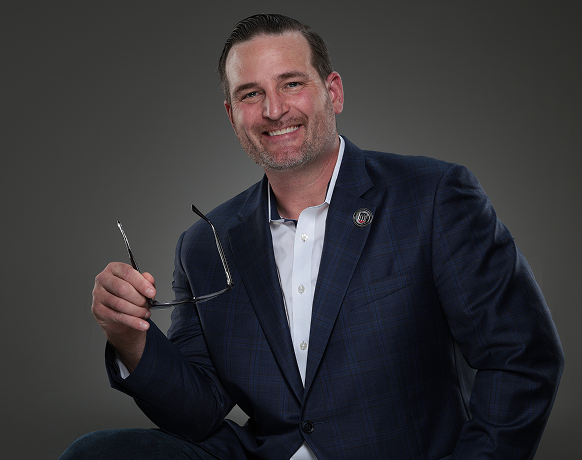
“Your identity is not your job. Your identity comes from the gifts that were given to you and the thumbprint that’s on you.”
Scott Thompson
Lead Franchise Consultant, Your Future Franchise
LinkedIn profile
Corporate Career Pros and Cons
Any honest franchise vs corporate comparison starts with respect for the corporate path. Scott climbed it himself, from director of franchise development to chief development officer to CEO, and most of the candidates we place built their capital and their management skills there. Many of them ran teams of employees, budgets, and company owned locations without ever owning a dollar of the equity. The problem rarely lies in the job. It lies in what the job stops giving you after 15 or 20 years.
What a corporate career does well
- Predictable income and employer benefits, which makes personal budgeting simple and makes money feel like a solved problem.
- Clear titles, defined responsibilities, and a ladder you can see.
- No personal capital at risk and no personal guarantee on a lease or a loan.
- A corporate team handles legal, HR, marketing, and IT, so employees focus on their lane.
Where it falls short
- Your income ceiling belongs to someone else’s compensation policy, and the benefits package can shrink with the next budget cycle.
- Your job depends on decisions made in rooms you never enter. In July 2026 alone, 1.7 million Americans got laid off or discharged, per the Bureau of Labor Statistics.
- Twenty years of effort builds equity for shareholders, not for you.
- Travel, meetings, and corporate culture set your schedule, and your kids’ schedules bend around it.
Q: Who keeps the profits in a corporate owned location versus a franchise?
A: In a corporate owned model, the parent company keeps 100 percent of the profits from each location and also absorbs 100 percent of the losses. In a franchise system, the franchisee owns the location, keeps what remains after royalty fees and expenses, and carries the downside personally. That single difference explains almost everything else about the two models.
Franchise Pros and Cons
The pros and cons look different depending on where you sit. From the franchisor’s chair, franchising allows rapid scaling because individual franchisees invest their own capital to open new locations, and the parent company earns its profits through franchise fees and royalties. Franchisees carry the debt, which reduces the franchisor’s risk on every unit that opens. From the franchisee’s chair, you get a head start you would never get alone, in exchange for rules you would never write for yourself.
Benefits franchisees receive
- Business assistance from the franchisor, including initial training, an operations manual, and ongoing operational support as you operate and grow.
- Brand recognition from an established brand and an existing base of potential customers, so day one of a franchise business looks nothing like day one of a new business built from scratch. An established brand also shortens the time consuming work of earning local trust.
- Buying power through the franchise network, which lets small business owners purchase goods and services at a lower cost than any single location could negotiate alone.
- A community of other franchisees who share templates, marketing ideas, and hard won lessons at quarterly meetings and annual conferences. Franchisees who lean on that community tend to solve problems faster than franchisees who operate in isolation.
- Transparent disclosure. The FTC requires the franchisor to hand you the FDD at least 14 days before you sign or pay.
Drawbacks franchisees should expect
- You pay an initial franchise fee up front and royalty fees on revenue, not profit, for the life of the franchise agreement.
- You follow the franchisor’s operational guidelines strictly. Those guidelines govern day to day operations and limit your ability to experiment with the business concept.
- Most franchise agreements require you to purchase goods through the franchisor’s supply chain and restrict where and how you operate.
- Your reputation rises and falls with the performance of other franchisees’ locations, which you do not control.
- Renewal usually requires a franchisee in good standing, and the franchisor can still decline to renew or renew on new terms when the agreement ends.
Watch Out
Royalties come off the top of gross revenue. The FTC warns that you may owe the franchisor even in a month when you lose money. Model that math before you fall in love with a brand, and read our breakdown of franchise operating costs so nothing in Item 6 surprises you.
Advantages of Franchising Over Starting From Scratch
Most corporate professionals who want out consider three doors: stay, start something independent, or buy into a franchise business. The advantages show up most clearly against the second door. Independent business owners carry higher startup risk because nobody has proven the business model yet, and every mistake gets made for the first time on their dime. Building systems from zero also runs time consuming in ways a corporate professional rarely anticipates.
A good franchisor already answered the expensive questions, and a good franchisor keeps answering them as the market changes. What does customer acquisition cost? Which suppliers deliver on time? What does the first 90 days of hiring look like? The franchisee buys those answers along with the brand, and the many advantages of that head start compound across every location the owner opens. Small business owners who evaluate a franchise opportunity this way stop asking “which brand looks exciting” and start asking “which business would I run well.”
| Advantage | Buying a franchise | Starting from scratch |
|---|---|---|
| Proven business model | The franchisor grants you the right to operate under its brand and hands you the systems that already work in other locations and markets. | You test every assumption yourself, on your own capital, with no track record to lean on. |
| Training and business knowledge | Franchisors provide initial training and ongoing support, so you do not need industry experience to open. | You learn the industry, the operations, and the hiring on the job, and every lesson costs time and money. |
| Brand recognition | Customers already know the name, which cuts the marketing spend a new business needs just to get noticed. | Nobody has heard of you. Local trust gets earned one customer at a time. |
| Buying power | The network negotiates with vendors as one buyer, which secures a lower cost on the goods and services every location needs. | You negotiate alone, at single location volume, with no leverage. |
| Peer support | Other franchisees answer the questions the operations manual forgot, and the best franchise systems build that community on purpose. As more people join a system, those relationships matter more, not less. | Your support network consists of whoever you can find and afford, and nobody runs your exact playbook. |
| Momentum | The International Franchise Association projects roughly 12,500 new franchise units and more than 150,000 new jobs in 2026, with Georgia among the top 10 growth states. | Growth depends entirely on what you build and fund yourself. |
Scott built his first business as a personal trainer who had to replicate himself through standards, training, and weekly coaching before he could open a second and third location. As he puts it, “That’s why you buy a franchise because they have all these things figured out.”
Q: Why does a franchise system grow faster than a corporate owned chain?
A: A corporate owned chain funds every new location from its own balance sheet, so expansion of company owned locations moves only as fast as internal resources allow. A franchisor accesses capital from franchisee fees and lets each franchisee fund and open new locations, which shifts the debt and the operating risk to the owner on the ground. The franchisor gives up some control over brand management in return, which explains why operational guidelines run so strict. That trade explains why franchisor owned and franchisee owned locations can feel identical to a customer and completely different to the person who owns them.
What Buying a Franchise Costs: Initial Investment and Ongoing Fees
Let us talk about money without the marketing gloss. Buying a franchise involves three layers of cost: the initial fee, the buildout and setup, and the working capital that carries you until the business pays for itself. Initial costs vary by industry, and a profitable franchise in one market can struggle in another, so treat every number as a starting point for your own due diligence. The only trustworthy numbers live in Items 5 through 7 of each brand’s FDD, and the SBA points to the estimated initial investment item as one of the three sections that matter most.
| Cost | When you pay it | What to know before you sign |
|---|---|---|
| Initial costs | ||
| Initial fee | Once, at signing | Per the FTC, commonly tens of thousands of dollars to several hundred thousand, and often nonrefundable. |
| Buildout, equipment, signage, and opening inventory | Before opening | Varies widely by industry and by market. Item 7 of the FDD shows the range the franchisor expects. |
| Training travel, initial marketing, insurance, deposits, and professional fees | Before and during opening | Your attorney and CPA charge for their own services. Budget for them alongside the franchisor’s numbers. |
| Working capital | Months one through ramp | Scott’s rule from 25 years of watching new franchisees: the FDD only has to show 90 days of working capital, and your real cash burn may run longer. Owners who run short on money in month six make fear driven decisions that choke the business. |
| Ongoing costs | ||
| Royalty fees | Weekly or monthly, for the life of the agreement | Typically a percentage of gross revenue, owed whether or not the location turned a profit that month. |
| Advertising or brand fund contributions | Weekly or monthly | May fund national campaigns rather than your local market. Ask how much flows back to your territory. |
| Technology, supply chain, and vendor fees | Monthly, inside the approved network | Most agreements require you to purchase goods through the franchisor’s supply chain, so compare those prices to open market rates. |
| Training, transfer, and renewal charges | As they arise | Training costs for new managers, plus transfer or renewal charges later in the agreement in some systems. |
💡 Pro Tip
Build a family budget first. Know what your household needs each month before you look at a single financial performance representation in Item 19. Then ask the franchisor and current franchisees to help you model good, better, and best scenarios for revenue ramp, cash burn, and the point where the business can pay you. Our guide to franchise funding options covers how candidates typically structure the capital stack.
On financing, a funding consultant can help you compare financing structures side by side. Some lenders are familiar with financing established franchise systems, but approval, pricing, and terms still depend on the borrower, the brand, the loan structure, and the lender’s underwriting. Some candidates use a properly structured ROBS arrangement to invest eligible retirement assets, and those arrangements carry meaningful tax and compliance requirements that call for experienced retirement plan and tax professionals.
The Fear Behind Leaving Corporate (and How to Manage It)
Every candidate who calls us carries the same question underneath the polite ones: what if I fail? After decades of a steady paycheck, the idea of signing a personal guarantee feels reckless, and the people who love you may say so out loud. We take that fear seriously because Scott has felt it three times, once at 22 with high interest debt and no management experience, and again after each of three corporate layoffs ended roles he had poured himself into.
Healthy caution and paralysis look similar from the outside. The difference shows up in what you do with information. Healthy caution builds a worst case model and asks whether you could live with it. Paralysis waits for a macro headline, then uses it as permission to stop.
- Validate with existing franchisees who already made the leap. Item 20 of the FDD lists franchisees in good standing along with those who left, and spending time with both groups tells you more than any brochure.
- Read Item 19 with a financial advisor and build your own good, better, and best cases. For example, ask what happens to the model if gas prices rise or interest rates climb, then look at what that does to the profits.
- Work with a funding consultant to understand your true cost of capital and your post closing liquidity.
- Write down your personal, compelling reason. “I want to own my own business” fails under pressure. “I want to change my family tree” holds.
“You have the data, you have the information. You’re letting fear dictate the decision.”
Scott Thompson
Lead Franchise Consultant, Your Future Franchise
LinkedIn profile
One more fear deserves its own paragraph: the dream of passive income. Franchising offers systems that make semi-passive ownership possible over time, through managers, KPIs, and standard operating procedures. It never offers a business that runs without an owner. The FTC lists passive income among the five biggest franchise myths, and Scott says it more plainly: “There’s really no such thing as passive income in a business.” The passivity you eventually enjoy comes from the people you hire, the culture you build, and the systems you hold them to.
How a Franchise Consultant Prescreens the Match
Most people assume a consultant sells franchises. The lead generation model that dominates this industry earns that assumption: collect a name, push three brands, collect a check. We built Your Future Franchise around the opposite idea. The brand comes last. You come first.
Our 7 step process starts with a 20 minute introductory call and a confidential questionnaire, then moves into a two hour consultation where we build a business model around your skills, your capital, your risk tolerance, and the life you want. That model becomes the filter for the brands in the FranChoice network, and it narrows hundreds of options to three or four that fit. Only then do brand presentations, brand investigation, and validation calls begin, and the relationships Scott built with franchisor executives over 25 years mean candidates meet decision makers rather than sales reps.
- We prescreen candidates, so franchisors meet people who match their ideal owner profile.
- We prescreen franchisors, so candidates meet systems with real support, sound unit economics, and a culture worth joining. Many franchisors talk a good game about training and support, and we check whether their franchisees agree.
- We stay through closing and after, with attorneys, CPAs, and funding consultants in our network who charge for their own services and know franchising well. Success in year one depends on that bench as much as on the brand.
- Candidates pay us nothing. Franchisors compensate us when an introduced candidate purchases a franchise.
“It’s not about finding good franchises. It’s about finding the right fit for you. Clarity always comes from process, not pressure.”
Scott Thompson
Lead Franchise Consultant, Your Future Franchise
LinkedIn profile
Q: What does the franchisee community actually do for a new owner?
A: More than most candidates expect. Franchisees in strong systems meet quarterly to share marketing ideas, trade templates and resources that save hours, and call each other when an operational challenge hits at 6 p.m. on a Friday. Annual conferences turn those phone contacts into relationships, and those relationships lift performance across the whole network. During brand investigation, we push candidates to ask current franchisees how often that community actually shows up.
Is Owning a Franchise Worth It for You?
For the right person in the right franchise system, yes. For the wrong person in any system, no, and the FDD will not save you from that mismatch. The franchise vs corporate question has no universal answer, only a personal one. After guiding hundreds of candidates and owning locations himself, Scott has a clear picture of which business owners thrive and which ones sell early. Business ownership rewards execution, and franchise business ownership rewards execution inside a system.
Franchise ownership tends to fit you if you
- Built real management experience in corporate, hired and coached employees, but never owned the full P&L.
- Prefer to execute a proven playbook rather than tinker with everything, and can hire and lead a team to run it.
- Move quickly on decisions and take ownership of mistakes.
- Have the capital to fund the initial investment plus honest working capital, without choking the business to pay yourself in month three.
- Want control of your time and a business your family can sell or inherit, which explains why we hear “financial freedom” and “legacy” far more often than “money.” Every owner we talk to wants the option to sell on their own timeline.
A corporate career probably still fits you if you
- Need a predictable paycheck to cover fixed personal expenses for the next 24 months.
- Prefer strategic guidance to hands on leadership of a small business and its employees.
- Would resent following an operations manual you did not write.
- Have not yet built the liquidity a franchisor requires, and would stretch to get there. Franchisees who open undercapitalized rarely get to enjoy the benefits that drew them in.
Before You Choose: Due Diligence Checklist
✓ Read the full FDD, with Items 5, 6, 7, 19, and 20 marked up, at least 14 days before signing.
✓ Have a franchise attorney review the franchise agreement, territory language, and renewal terms.
✓ Call current and former franchisees from Item 20, including some who left the system, and ask what success and failure looked like at their locations.
✓ Build a family budget and good, better, and best models with a financial advisor.
✓ Confirm the role you will play day to day matches the role you want.
✓ Write down your compelling reason and share it with your spouse before you sign.
If you want a deeper look at what separates a strong system from a weak one, our article on strong franchise system evaluation walks through the questions we ask. And if this page has you wondering whether now fits at all, read our signs you should wait before buying a franchise. We would rather tell you to wait than watch you sign early.
Why Your Future Franchise
Plenty of consultants can hand you a brand list, and plenty of franchisors will happily sell you a territory. Very few have signed a franchise agreement with their own name on it, then sat on the franchisor side of the table deciding who gets approved, then sat in the private equity boardroom deciding which brands get funded. Scott Thompson has done all three across 25 years, and he teaches franchising as a faculty member at the University of Georgia.
- Direct experience as a franchisee and a franchisor, not just a consultant who has read about both.
- A curated portfolio of 10 to 12 high performing franchise brands, prescreened for support, culture, and unit economics.
- The FranChoice network for direct, prescreened franchisor connections.
- Fit and matching first. We do not push deals, and we drop any brand you rule out without a second pitch.
- An extensive network of franchise attorneys, lenders, and CPAs who support candidates through closing and into their first year of operating.
- No consulting fee for candidates, ever. Franchisors compensate us when a placement closes, so our incentive sits with the long term health of your business, not the size of the check.
- National reach with deep roots in Atlanta, Georgia, inside the Southeast region the IFA ranks among the fastest growing for new franchise locations.
Candidates from Atlanta, Georgia, and across the country have shared what the process felt like on our reviews page, and you can read Bruce’s full story of leaving a 30 year corporate career to buy a franchise. If you would rather start with the document itself, download our free FDD guide before your first call.
Weigh Both Paths With Someone Who Has Walked Them
Schedule a no pressure consultation with Your Future Franchise and work through the franchise vs corporate decision with a consultant who has lived both. We will tell you whether buying a franchise fits your capital, your skills, and your life, and we will tell you if it does not. Franchisors pay us when a placement closes, so the consulting process costs candidates nothing.
Frequently Asked Questions About Leaving Corporate for a Franchise
Which offers more freedom, a franchise or a corporate job?
Owning a franchise business gives you control over your schedule, your hiring, and your local decisions, and you keep the equity you build. A corporate job gives you freedom from capital risk and from the weight of every payroll. The franchise vs corporate freedom question really asks which kind of freedom you value more. Candidates who want their evenings and their kids’ games back usually lean toward ownership. Candidates who want to leave work at work usually stay.
Can I keep my corporate job while buying a franchise?
Some franchise business models support an owner who keeps a job during the ramp, especially service brands with a manager led structure. Many do not, and most lenders want to see either a working spouse or post closing liquidity to cover personal expenses while the business grows. Ask each franchisor about the time commitment in year one and validate the answer with current franchisees before you decide.
What happens if my franchise fails?
You still owe what you signed for, and the business may still owe a lease, a loan with a personal guarantee, and fees under the franchise agreement. That reality explains why we push every candidate to build a worst case model with a financial advisor and to have a franchise attorney review exit and transfer terms before signing. No franchise carries a guarantee of success, and anyone who says otherwise should end the conversation.
Do franchises fail less often than independent businesses?
You will see that claim on many marketing sites, usually without a reliable source, and we do not repeat it. A new business built from scratch does carry the extra risk of an unproven business model, while buying a franchise hands you a tested one. Neither model removes the risk of a weak market, a bad hire, or an undercapitalized owner. Judge each brand on its Item 20 turnover data and your own validation calls, not on an industry average.
How much control does a franchisor really have over my business?
A lot. The franchise agreement typically dictates how you run the business, including your territory, your suppliers, your signage, your pricing approach, your marketing, and your operating hours. The FTC lists “you’ll be your own boss” among the myths it warns buyers about. You own the business and its outcome, and you operate it inside a system that someone else designed. People who thrive treat those rules as the reason they bought in.
How long does it take to go from corporate employee to franchise owner?
Our matching process averages about 30 days, and the full path from first conversation to opening day varies by brand, financing, and real estate. Home services brands often open faster than brick and mortar concepts that need buildout. Our article on the timeline of buying a franchise breaks each stage down.
Should I use a consultant or research brands on my own?
You can research alone, and many candidates start that way. The risk to your business lies in what you cannot see: which franchisors quietly struggle with support, which Item 19s hide a wide gap between top and bottom performers, and which brands fit your skills rather than your search history. A consultant who prescreens both sides, and who has owned and run franchises personally, closes that gap. Read what a franchise business consultant in Atlanta, Georgia does day to day if you want the full picture.
Does buying a franchise make sense after a layoff?
It can, provided the decision comes from a plan rather than from panic. A layoff often frees the capital, the time, and the motivation that a franchise search needs. It can also tempt you to buy the first brand that returns a call. Take the time to build your budget, define your compelling reason, and prescreen your options with someone who has no incentive to rush you.
Whether you choose comfort or freedom, make the franchise vs corporate decision with the FDD in hand, a franchise attorney and financial advisor at your side, and a consultant who tells you the truth.